

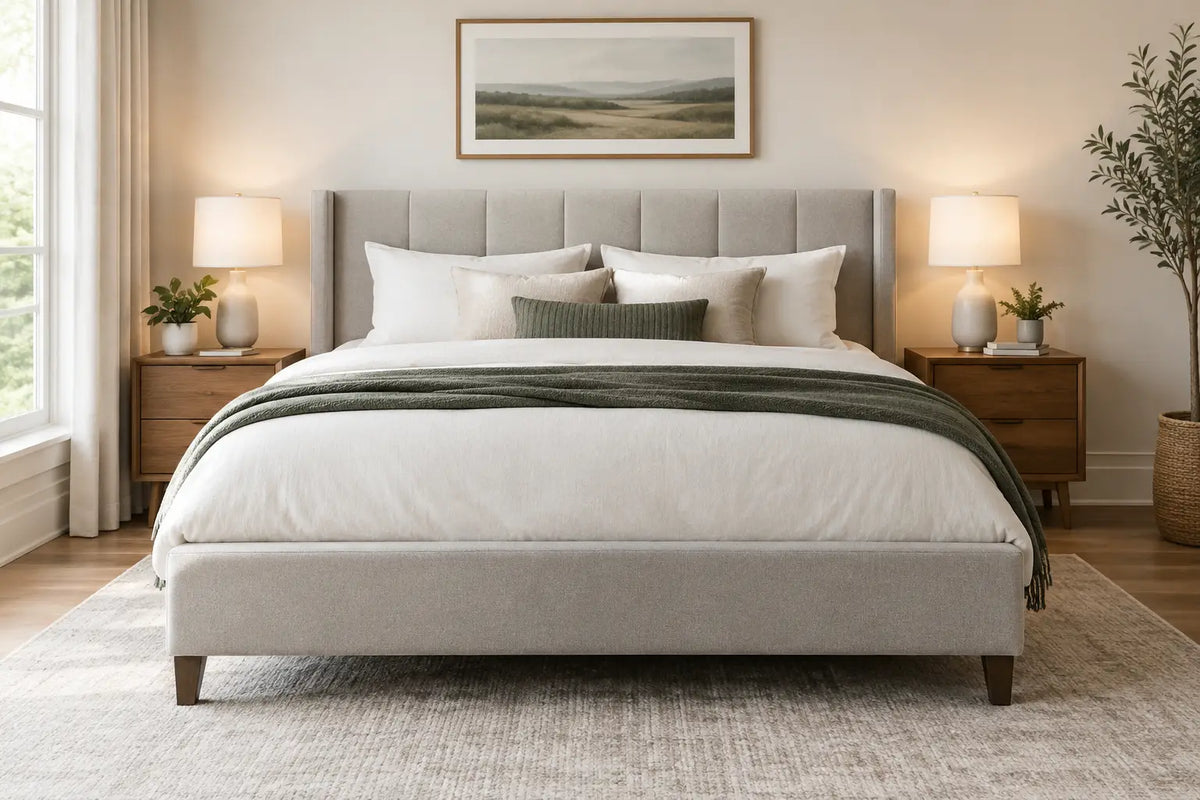
A mattress may determine how you sleep, but the bed frame determines how the room feels when you enter it. Its height, silhouette, fabric and finish set the visual rhythm around which every other decision follows - from bedside tables and lighting to the texture of the curtains. For a considered bedroom, bed frames should be chosen as furniture of consequence, not simply as a structure beneath the mattress.
The right design brings together two requirements that deserve equal attention: dependable support for restorative sleep and a proportion that gives the bedroom calm, presence and permanence. This is especially true in a principal suite, where the bed is naturally the room’s focal point.
Why Bed Frames Deserve More Consideration
A beautifully made bed frame does more than hold a mattress at the correct height. It creates a sense of arrival. A generous upholstered headboard can make a wide wall feel intentional rather than empty; a low, tailored frame can lend a contemporary scheme a quieter, more architectural character. The difference is often found in details that are easy to overlook online: the depth of the upholstery, the neatness of the piping, the quality of the fabric, and the way the footboard meets the floor.
The practical side matters just as much. The frame and base need to work in harmony with the mattress, providing stable, even support rather than allowing it to flex unevenly over time. A well-specified bed also makes everyday life more comfortable. It should be easy to dress, comfortable to sit against when reading, and proportioned to allow clear movement around the room.
For many homes, this is a long-term purchase. Rather than following a passing trend, choose a design with enough character to feel distinctive and enough restraint to work as your interiors evolve.
Start With Scale, Not Just Bed Size
UK mattress sizes are familiar, but the external dimensions of a bed can vary considerably. A king size mattress measures 150cm by 200cm, yet a winged headboard, deep side rails or an upholstered surround can make the overall footprint much larger. In a well-appointed room this may be exactly the effect you want. In a London flat, converted townhouse or guest room, it may alter how easily the space functions.
Before selecting a design, consider the room as it is used, not just as it appears on a floor plan. Allow sufficient space to walk comfortably around both sides of the bed, open wardrobes and drawers, and make the bed without compromise. If the bedroom is shared, access from each side is usually worth preserving.
Headboard height deserves the same attention. A tall, deeply upholstered headboard gives a bedroom an unmistakably luxurious presence, particularly with high ceilings or generous wall space. In a more compact room, a lower profile can feel poised and balanced while still offering a refined backdrop for pillows and cushions.
The visual weight of upholstery
Upholstered frames offer exceptional flexibility because fabric softens the strongest element in the room. Linen-look weaves, tactile bouclés, brushed velvets and tailored plains each create a different atmosphere. The fabric should relate to the architecture and light of the room as much as to the colour of the carpet.
A warm neutral can create an elegant foundation for layered bedding and art, while a richer tone brings depth to a more restrained scheme. Texture is often more enduring than a bold colour statement. Consider the fabric in morning light, evening light and with your preferred bedside lamps before making a final decision. Fabric swatches are invaluable here: they let you assess undertone, pile direction and tactile quality alongside your existing finishes.
Choosing the Right Type of Bed Frame
The most suitable design depends on how you want the bedroom to work. There is no universally superior option, only the version that best answers the room’s demands.
An upholstered bed frame is often chosen for its softness, tailored finish and breadth of customisation. It is particularly effective in rooms where the bed needs to feel like a refined centrepiece. Details such as buttoning, fluting, wings or contrast piping can bring a bespoke sensibility, although simpler lines tend to offer greater longevity if you regularly refresh the surrounding décor.
A divan base provides a more discreet, supportive foundation, with the option to introduce a statement headboard separately. This approach can be ideal when you want exact control over the headboard scale or need practical drawer storage without increasing the visual bulk of the bed. It also suits rooms where the mattress should take precedence.
Ottoman storage beds offer a particularly elegant answer to limited storage. The entire mattress platform lifts to reveal a substantial, concealed compartment, keeping spare linens, seasonal duvets or luggage close at hand without adding freestanding furniture. A quality lifting mechanism is essential: it should feel controlled and balanced, not heavy or abrupt. Ottoman beds are excellent in space-conscious homes, though they are best for items you do not need to retrieve several times a day.
A framed bed with a footboard can feel more formal and complete, adding definition in a large bedroom. However, a footboard does take up visual and physical space. For taller sleepers, or in narrower rooms, an open-ended design may provide a more relaxed and practical choice.
Match the Base to Your Mattress
A premium mattress deserves a base designed to support it properly. This is not merely a question of comfort on the first night. Inadequate or uneven support can affect how a mattress performs and, in some cases, its long-term condition.
The appropriate base depends on the mattress construction and the manufacturer’s recommendation. Pocket-sprung, natural-fibre and hybrid mattresses each have different characteristics, and the support beneath them should allow those materials to perform as intended. A quality platform top offers a firmer, more uniform feel, while a sprung edge or sprung base can add a degree of responsiveness. Neither is automatically better: it depends on the mattress, your preferred feel and the overall sleeping experience you wish to create.
Consider bed height as part of this decision. A higher sleeping position can feel more traditional and makes getting in and out of bed easier for some people. A lower frame feels more contemporary and can be especially elegant beneath a substantial headboard. The best height is one that feels natural every day, not simply one that photographs well.
Construction is felt in the details
Luxury is rarely about excess. It is more often evident in precise upholstery, substantial internal construction and components that continue to function quietly after years of use. Examine the quality of the fabric, the alignment of seams, the finish of the legs and the stability of the frame. If choosing storage, ask how the mechanism operates and what access is required around the bed.
For upholstered designs, consider care as well. A removable or washable cover is not always appropriate for a tailored bed, but durable upholstery and thoughtful placement can make a significant difference. A pale bouclé in a rarely used guest suite has different demands from a velvet frame in a busy family home. Choose with the real rhythm of your household in mind.
Create a Bedroom With a Sense of Continuity
The most successful bedrooms are composed rather than assembled. Your bed frame should establish a relationship with the mattress, headboard, bedside furniture and lighting, rather than competing with each piece. Repeating one or two elements - a softened edge, a brushed metal finish, a warm timber note - is often enough to make the room feel quietly resolved.
Bedding provides the final layer. Crisp cotton, washed linen or a fine wool throw will read differently against velvet or a textured weave. Allow the upholstery to influence the palette, but avoid matching everything too closely. Subtle contrast gives a room depth.
At The Natural Collection, the process can begin with proportion and fabric, then move naturally towards the base, mattress and finishing details. It is a more assured way to make a significant purchase: not by selecting a bed in isolation, but by considering how it will support your sleep and define the room for years to come.
Choose the frame that makes you pause when you see the bedroom at the end of the day. That quiet sense of comfort and order is often the clearest sign that the decision is the right one.
Share:
Best Beds for Tall Sleepers With Room to Rest
Upholstered Bed vs Wooden Bed: Which Is Right?