

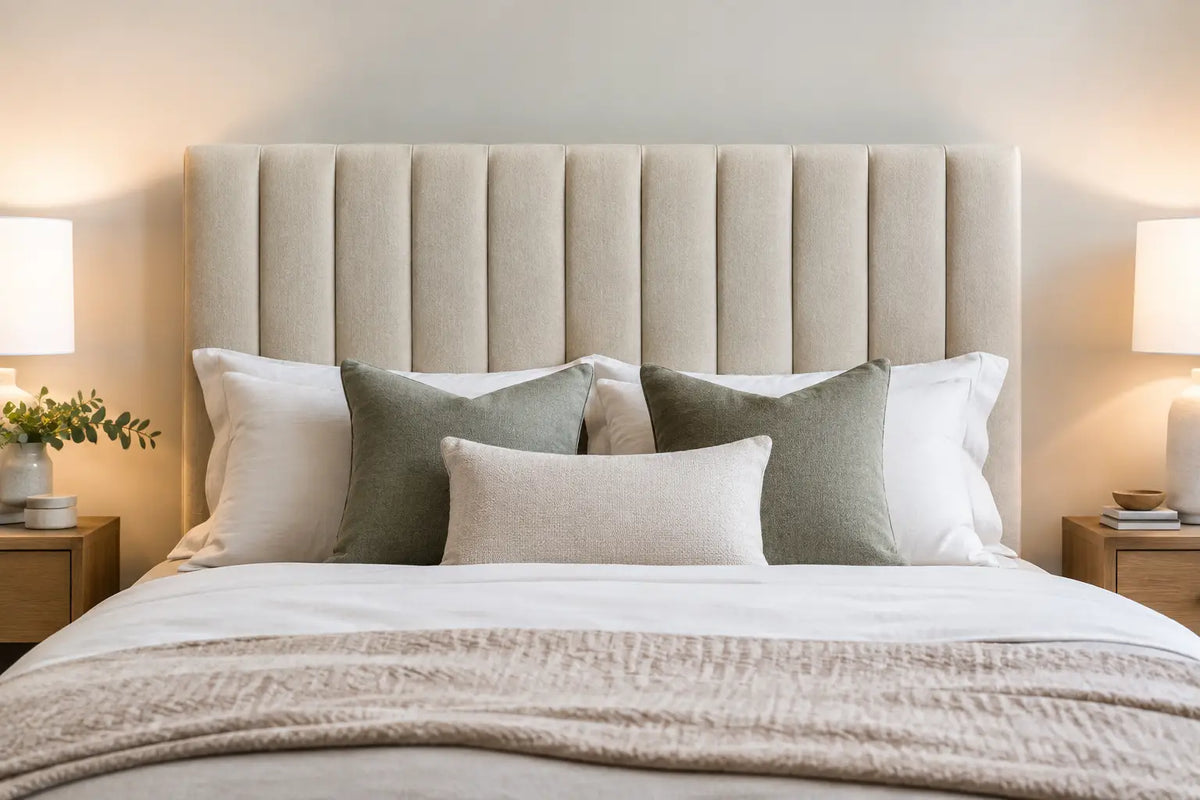
A beautifully made bed deserves more than a functional backdrop. Bespoke upholstered headboards create the visual architecture of the room: they establish scale, soften the wall behind the bed and give an otherwise simple scheme a considered, residential-hotel finish. The difference is rarely a single dramatic flourish. It lies in the relationship between height, shape, fabric, piping and the precise way the headboard meets the mattress and bedside furniture.
For a bedroom designed to feel personal rather than assembled, a tailored headboard is often the most influential decision after the mattress itself. It can introduce quiet texture to a pared-back interior, provide a confident focal point in a larger principal suite, or bring an unexpected degree of comfort to a compact London bedroom.
Why bespoke upholstered headboards change a room
The bed naturally commands attention, particularly in a room with generous proportions. Yet a standard headboard can appear undersized, overly familiar or disconnected from the rest of the furniture. A bespoke approach allows the bed to be composed as a complete piece, rather than treated as a base with an accessory attached.
Height is the first consideration. A taller design can give a room a more architectural presence and make low ceilings feel intentional when the proportions are right. In a grander room, it prevents the bed from becoming visually lost against a broad wall. That said, taller is not invariably better. Beneath a statement artwork, a low window or a detailed cornice, a more restrained height may preserve the room's balance.
Width is equally valuable. A headboard that extends beyond the bed can frame the sleeping area, accommodate integrated bedside tables and create a calm, continuous line across the wall. This is particularly effective in suites where the aim is a composed, hotel-inspired feel. In a narrower room, however, matching the bed width exactly may be the more elegant choice, leaving sufficient breathing room at either side.
Upholstery adds another layer. It absorbs sound, feels inviting when reading or enjoying a leisurely morning in bed, and brings a warmth that timber or metal cannot quite replicate. The right fabric also changes with the light throughout the day, lending depth without demanding attention.
Begin with proportion, not fabric
It is tempting to start with a favourite velvet or a dramatic boucle. In a well-resolved bedroom, though, the silhouette must come first. Consider the bed size, ceiling height, wall width, bedside tables and lighting before settling on colour or texture.
For a king or super king bed, an upholstered headboard needs enough visual weight to support the mattress and base beneath it. A slender, lightly padded profile can feel sophisticated in a contemporary scheme, especially with fine timber furniture and discreet wall lights. A deeply padded panel or winged shape has more presence and suits rooms that favour generous layers, heavier curtains and a more enveloping atmosphere.
The position of bedside lighting deserves early attention. Wall lights set behind a tall headboard may need to be mounted above its top edge or aligned with its outer panels. If reading lamps are integrated into the headboard arrangement, their reach and cable placement should be planned before upholstery is finalised. These are small decisions, but they separate a room that looks polished from one that feels compromised after installation.
Shapes that hold their appeal
A rectangular upholstered headboard remains enduring because it is adaptable. It can be crisp and tailored with a narrow border, softened with rounded corners, or elevated through channel detailing. It works as comfortably in a Georgian townhouse as it does in a modern new-build, depending on the fabric and finishing.
A gently curved top brings softness without becoming overly decorative. It is an excellent choice where the bedroom has clean lines but needs relief from angular joinery, picture frames or tall wardrobes. Scalloped and more expressive silhouettes can be striking, although they demand restraint elsewhere. Their appeal depends on the room having enough space and a sufficiently calm supporting palette.
Winged headboards offer a greater sense of enclosure. The side returns create a particularly inviting setting for reading and help give a large bed a cocooning quality. They are most successful when there is enough clearance beside the bed. In a tight room, the wings can make the layout feel crowded, especially when paired with substantial bedside chests.
Choosing fabric with a designer's eye
Fabric selection is where bespoke upholstered headboards become distinctly personal. The aim is not simply to choose an attractive swatch in isolation, but to select a material that works with daylight, artificial lighting, bedding, window treatments and how the room will be used.
Wool offers understated texture and a tailored finish. It is especially suited to calm, layered interiors where the distinction comes from material quality rather than high contrast. Linen blends have an effortless, relaxed character, but they can show natural variation and may suit a lightly used guest room better than a family bedroom where resilience is paramount.
Velvet brings depth and a pleasing play of light, making it a natural choice for a headboard with curves, fluting or deep buttoning. It can read as sumptuous rather than showy when chosen in mineral tones such as moss, tobacco, stone, midnight or soft putty. Performance velvets and hard-wearing woven fabrics are often the more practical option for households with children, pets, or a preference for breakfast in bed.
Boucle and other tactile weaves are compelling in contemporary interiors, though they are not universal. Their texture can be beautiful against smooth plaster, polished timber and crisp percale, but a heavily textured headboard combined with patterned wallpaper, elaborate curtains and printed cushions can make a room feel overworked. Luxury is often expressed through confident editing.
Before committing, view fabric swatches in the intended bedroom at different times of day. A neutral that feels warm under showroom lighting may turn cool in a north-facing room, while a richly coloured textile can become far more subdued in evening light. The Natural Collection offers fabric samples for precisely this reason: a considered purchase should be judged in context, not from a small digital image.
Detail is where craftsmanship becomes visible
The most memorable upholstered pieces are distinguished by restraint and precision. A finely applied border can define the outline of a plain panel. Piping offers a crisp, tailored edge, while contrast piping introduces a more decorative note without needing a patterned fabric. Self-piping is usually the quieter choice and allows the silhouette to speak for itself.
Buttoning creates depth and heritage character. Traditional deep buttoning is suited to more classic interiors and works particularly well in velvet, where the folds catch the light. For a cleaner look, consider shallow buttoning or vertical channels. Channelled upholstery can visually increase height, making it a useful option in rooms with lower ceilings, while horizontal panels can make a broad wall feel more expansive.
The degree of padding matters as much as the pattern. A headboard intended for regular reading should feel supportive, not merely decorative. Ask how the upholstery is constructed and whether the board will be wall-mounted or fixed to the bed base. Wall mounting can create a particularly substantial, custom-installed appearance, while a bed-fixed design may be more suitable where flexibility or access is needed.
Coordinate the whole bed, without over-matching
A headboard does not need to match every element in the room. In fact, an exact match between headboard, curtains, cushions and bed valance can feel dated unless the scheme is intentionally formal. It is more sophisticated to repeat a colour, texture or undertone in a few considered places.
For example, a warm grey wool headboard might sit beautifully with smoked oak, ivory bedding and a single accent cushion in a related tobacco tone. A deep navy velvet headboard can be balanced with pale walls, antique brass lighting and a natural linen throw. The objective is cohesion, not uniformity.
If choosing an ottoman storage bed or a divan base, consider how the headboard upholstery will relate to the base. Matching fabric creates a refined, fully tailored bed, while a complementary neutral base can make the headboard feel more like a standalone design feature. In either case, ensure the mattress depth is considered. An exceptionally deep mattress can obscure too much of a lower headboard and alter the intended proportions.
Make the practical decisions early
A bespoke-looking result relies on accurate measurements. Confirm the finished width and height, not simply the mattress size, and measure from the floor to account for the bed base, castors or feet. Check for skirting boards, plug sockets, switches, radiators and picture rails. These details can affect how flush the headboard sits and whether wall mounting is possible.
Delivery access should be part of the conversation for larger designs. Measure stair turns, lifts, doorways and the route into the bedroom, particularly in period properties and upper-floor flats. A substantial upholstered headboard may be worth every inch once in place, but it needs a sensible route to the room.
Finally, choose with the life of the bedroom in mind. A formal guest suite can accommodate lighter, more delicate materials. A principal bedroom used every day benefits from fabric with reassuring durability and a shape you will still appreciate years from now. The finest bespoke upholstered headboards do not follow a passing trend; they make the room feel settled, comfortable and unmistakably yours.
A well-chosen headboard is an invitation to slow down at the end of the day. Give it the same attention you would give a fine mattress, and it will reward the room with comfort, poise and a lasting sense of arrival.
Share:
Choosing an Upholstered Bed Frame for a Fine Bedroom
Floating Divan Base for a Refined Bedroom