

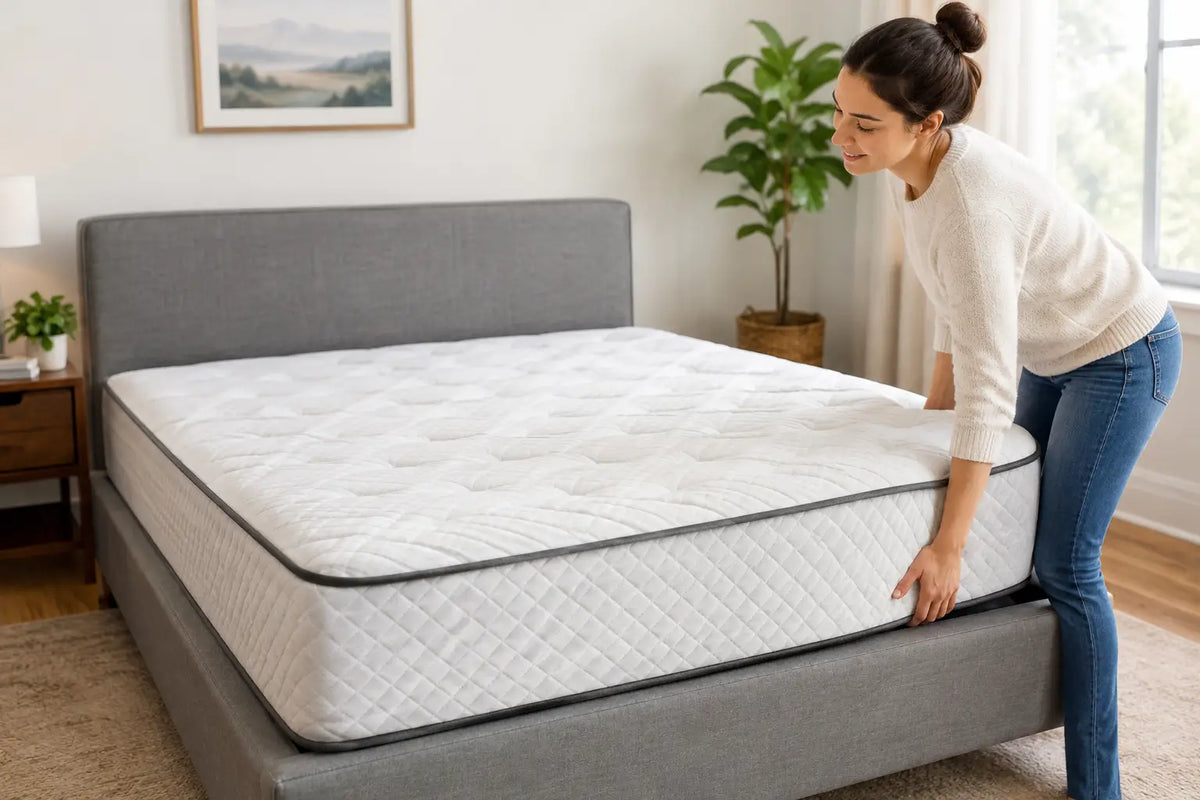
A beautiful bed should feel as considered at 11pm as it does when the bedroom is first dressed. A simple mattress rotation schedule is one of the most effective ways to protect that feeling: it helps distribute nightly pressure more evenly, maintains the mattress’s intended support and preserves the composed appearance of the bed over time.
For a premium mattress, rotation is not a chore to overlook until a dip becomes obvious. It is a small piece of sensible care, particularly in a main bedroom where two people may sleep in the same positions night after night. Done at the right intervals, it supports the long-term comfort you invested in.
The recommended mattress rotation schedule
For most modern mattresses, rotate the mattress every three to six months. Turn it 180 degrees so the head end moves to the foot of the bed, while the sleeping surface remains facing upwards. A useful rhythm is to do this at the change of season: once in spring, summer, autumn and winter for a mattress receiving regular use.
A quarterly rotation is particularly worthwhile during the first year. New comfort layers and fillings settle as they adapt to your sleeping habits, and early rotation helps this settling happen more evenly. After the first 12 months, a twice-yearly routine may be entirely suitable for many households, provided the mattress is wearing evenly and its manufacturer gives no different instruction.
There is no advantage in rotating a mattress excessively. Materials need time to respond naturally to use, and monthly movement is usually unnecessary. The aim is measured, consistent care rather than constant intervention.
Rotation and flipping are not the same thing
The distinction matters, especially when selecting a higher-specification mattress. Most contemporary mattresses are single-sided: their comfort layers are carefully arranged above the support core, and they must not be turned upside down. Rotate these models only.
A traditional double-sided mattress is designed to be both rotated and flipped. In this case, it may need turning every three months, alternating between rotating it head-to-foot and flipping it over. The precise sequence depends on the construction, so the care label and manufacturer guidance should always take precedence.
If you are unsure which type you own, do not guess. A single-sided mattress can be made uncomfortable, and potentially compromised, by being flipped. Look for a label identifying the sleeping surface, consult the supplied care information, or ask the retailer before moving it.
A simple way to remember the routine
Choose dates that already have a natural place in the household calendar. The first weekend after the clocks change, the beginning of each new season, or the day you change between lighter and warmer bedding can all work well. Add a discreet reminder to your calendar and make rotation part of refreshing the room, rather than a separate task that is easily postponed.
For a double-sided design, make a note of the last movement. A small label on the mattress care booklet is enough. This avoids repeatedly rotating in one direction while forgetting to flip, and makes the process straightforward for a house manager or household member helping with bedroom care.
Why rotation protects a fine mattress
Every sleeper creates their own pattern of pressure. Shoulders, hips and the edge used to get in and out of bed all receive more concentrated use than other areas. Couples can add a second set of habitual positions, while a bed used for morning reading, watching television or working from a laptop may receive additional loading in one place.
Quality fillings are designed to contour and settle, and a degree of body impression can be completely normal. Natural fibres, in particular, often develop a gentle settled character as they respond to warmth, moisture and pressure. This is different from premature sagging. Rotation helps prevent one section receiving a disproportionate amount of wear, allowing the mattress to deliver its designed comfort more consistently across its surface.
It also keeps the visual proportion of the bed more polished. On an upholstered bed with a tailored headboard, a well-kept mattress contributes to the clean, balanced silhouette that makes the whole room feel finished.
Adjust the schedule for the way you sleep
The best schedule is guided by use, not just the calendar. A guest-room mattress used a few weekends a year can usually be rotated every six to 12 months. A primary bedroom mattress, by contrast, benefits from regular quarterly attention, especially in the early years.
Consider rotating more frequently if there is a marked difference in body weight between partners, if one person regularly sleeps alone on one side of a larger bed, or if the mattress is used heavily during the day. A family bed where children often join for a weekend film may also benefit from a closer eye.
Conversely, do not assume that a slight softening means the mattress needs replacing. Natural settlement is expected in many premium constructions. What deserves investigation is a pronounced or persistent dip, a change in support that affects sleep, or visible unevenness that does not improve after rotation. Photograph the mattress without bedding before contacting the supplier, and ensure it is resting on an appropriate base.
The bed base matters as much as the routine
A mattress cannot perform at its best on an unsuitable foundation. A divan base should be level and in sound condition; a slatted frame should have slats that are evenly spaced, secure and correctly supported. For larger sizes, inspect the central support and legs periodically. A slight fault beneath the mattress can create the impression of uneven mattress wear when the real issue lies with the bed frame.
This is particularly relevant when changing a mattress while retaining an existing bed. Check the mattress manufacturer’s requirements for base type and slat spacing before purchase. A carefully chosen mattress and a well-engineered base work together, which is why complete bed solutions often provide a more assured result than treating each element in isolation.
For an ottoman bed, always close the mechanism fully before rotation and clear the surrounding area. The mattress should be moved by two people where possible. Premium mattresses can be substantial, and handling them carefully protects both the product and the upholstered rails, footboard or surrounding furniture.
How to rotate a mattress safely
Strip the bed first and take the opportunity to air the mattress for an hour or two, if the room allows. Open curtains, ventilate the space and avoid placing the mattress directly against a radiator. Then move bedside tables, benches or any pieces that would restrict a clear route around the bed.
With two people, lift from the side handles only if they are explicitly intended for positioning. Many handles are designed to help align the mattress rather than bear its full weight. Slide the mattress gently towards one side, pivot it, then settle it back into place with the head end now at the foot of the bed. Avoid folding, sharply bending or dragging it over upholstery.
Before remaking the bed, check that the mattress is centred on the base and that no piping, border or protector is caught beneath it. This is also the ideal moment to inspect the protector and wash it according to its label. A breathable mattress protector is a sensible safeguard against spills and everyday moisture, but an impermeable cover may alter the feel and airflow of some natural mattresses.
What rotation cannot solve
Rotation is preventative care, not a cure for structural damage. It will not rectify broken slats, a collapsed divan base, moisture damage, stains that invalidate a warranty, or a mattress that was never the right tension for its sleeper. Nor should it be used to disguise a clear fault.
Comfort is personal. A mattress may be beautifully made yet feel too firm, too yielding or too warm for an individual sleeper. This is why it is worth considering sleeping preferences, body weight, bed base and bedroom temperature before purchase, alongside the design of the bed itself.
A considered rotation routine is ultimately an expression of the same care that goes into choosing the right fabric, proportion and finish for a bedroom. Set the reminder, move the mattress with care, and let every side of your bed share the work of delivering a restful night.
Share:
What an Old Mattress Removal Service Includes
Back Pain Beds: What Actually Supports Sleep