

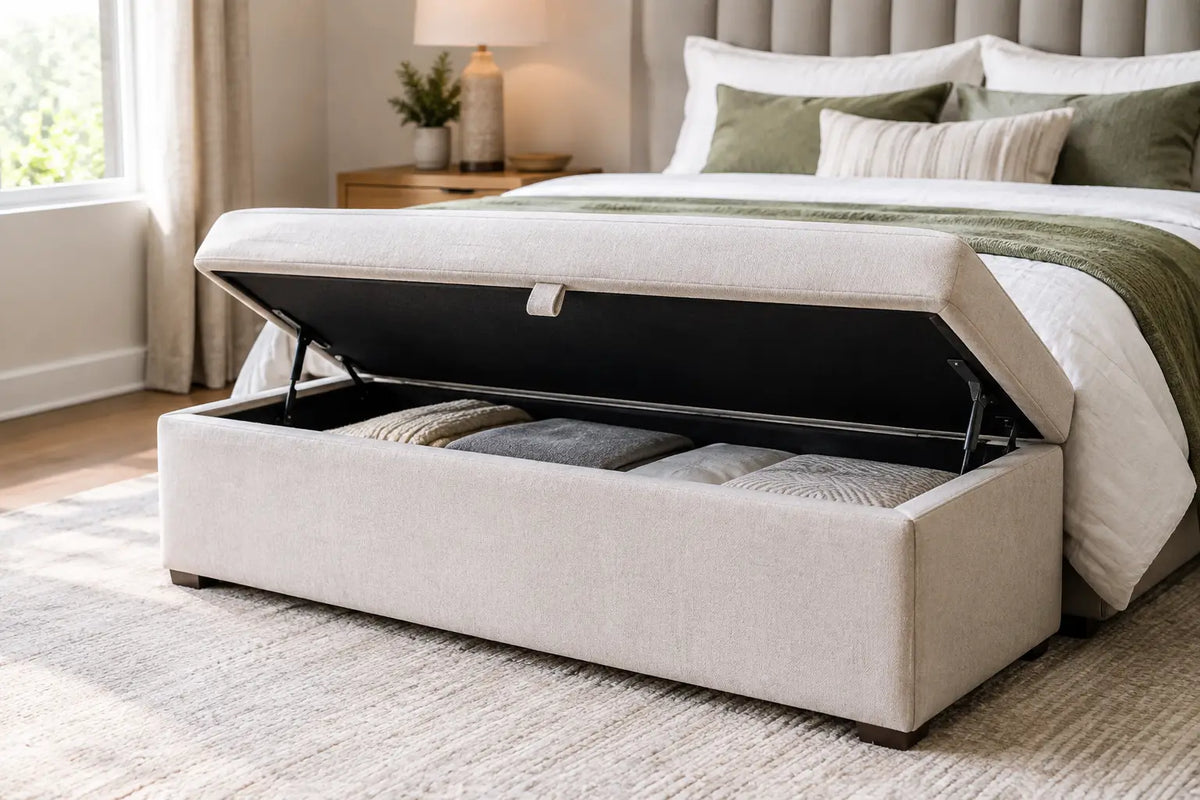
A beautifully appointed bedroom should never feel compromised by the practicalities of everyday life. Ottoman beds offer an elegant answer: substantial, hidden storage beneath the mattress, contained within a bed designed to remain a refined focal point. For homes where proportion, material quality and a sense of order matter, this is storage that need not announce itself.
The appeal is not simply that an ottoman bed creates more room. It is that it preserves the visual calm of the bedroom. Spare linen, winter duvets, pillows and the pieces that would otherwise require an additional chest or overfilled cupboard can be kept close at hand, yet entirely out of sight.
Why ottoman beds suit considered interiors
A bedroom is often the most private room in the home, but it deserves the same attention to detail as a drawing room or dressing area. An upholstered ottoman bed brings softness, scale and texture to that setting, while its concealed base performs a quietly useful role.
This combination is particularly valuable in London homes, period properties and well-designed new builds, where wardrobes may be carefully planned but not limitless. Rather than adding visible furniture purely for storage, the bed makes better use of the largest footprint in the room. The result feels composed rather than crowded.
For larger principal suites, an ottoman bed is equally relevant. It can hold guest bedding, seasonal layers or household linens without asking a dressing room to do all the work. The benefit is not only extra capacity, but the freedom to keep wardrobes dedicated to clothing and the bedroom free of unnecessary visual noise.
The storage mechanism matters as much as the upholstery
Not all ottoman beds feel the same in daily use. At a premium level, the lifting mechanism should be smooth, balanced and reassuringly controlled. Gas-assisted hydraulics take much of the weight of the mattress, allowing the base to lift with far less effort than many people expect.
There are two principal opening styles. An end-opening ottoman lifts from the foot of the bed, creating a broad opening along its length. It is often a natural choice where there is clear space at the footboard and where access from the end suits the room layout.
A side-opening design lifts from one long side. This can be preferable in a narrower bedroom, or where a bench, fireplace or dressing table makes the foot of the bed less accessible. The correct orientation is determined by the room, not simply personal preference. Consider which side has comfortable clearance once bedside tables, curtains and doors are in place.
The base should also feel substantial when open. A properly made ottoman storage bed is engineered to support the mattress and its upholstery evenly, rather than relying on a mechanism that feels strained or unstable. Ask about the construction, mattress suitability and recommended weight range before finalising your choice, especially if you favour a deep, generously upholstered mattress.
Choose the right bed size before refining the design
Storage volume increases meaningfully with bed size, but so does the bed’s presence in the room. A king-size bed is a popular balance for couples, offering generous sleeping space and a notably useful storage cavity. A super-king bed creates an even more luxurious sleeping arrangement, although it requires a room with sufficient circulation space around it.
The most successful bedrooms allow the bed to breathe. As a guide, consider where you will stand to make the bed, open wardrobes and draw curtains. An ottoman base may be concealed when closed, but its opening action still needs space. A bed that is technically the right size can feel less successful if the mechanism cannot be used comfortably.
Mattress depth deserves equal consideration. A high-quality mattress brings the comfort and support that make a bed worthwhile, but it also affects the total height and visual proportion of the finished piece. A tall headboard can carry a deeper mattress beautifully in a grander room, while a more restrained design may be better suited to a lower ceiling or a compact bedroom.
Upholstery is where function becomes furniture
The storage element may be hidden, yet the upholstery is seen and touched every day. This is where an ottoman bed becomes part of a wider interior scheme rather than a practical purchase made in isolation.
A fine woven fabric in a soft neutral tone can create a calm, architectural backdrop for layered bedding and textured cushions. Bouclé introduces warmth and tactile depth, while velvet brings a more formal, evening-like richness. For a tailored look, consider a plain upholstered frame with a statement headboard shape. For something more decorative, deep buttoning, fluting or panelled detailing can introduce character without making the room feel overworked.
Scale is essential. A headboard that rises confidently above the pillows gives a bed presence, especially in a room with generous ceiling height. In a more modest setting, an elegantly shaped headboard with clean upholstery can be every bit as luxurious. The finest choice is rarely the most elaborate one. It is the one that sits convincingly within the room.
At The Natural Collection, complimentary fabric swatches are a valuable part of the decision-making process. View them in the bedroom at different times of day, alongside paint, curtains, flooring and existing furniture. Daylight can reveal an undertone that showroom lighting does not, while evening light may change the apparent depth of a fabric entirely.
What should you keep inside an ottoman bed?
The best use of the space is for items that are valuable to have nearby but do not require daily access. Spare pillows, lightweight throws, duvet sets, guest bedding and seasonal quilts are natural choices. Storage bags can help keep contents neat, though avoid overfilling the base so that lifting remains easy and the items themselves retain their condition.
It is wise to avoid storing anything prone to damp, highly fragile pieces, or objects that could mark the interior lining. If you are placing heavier items inside, distribute their weight evenly rather than concentrating it in one area. The space is generous, but it should be treated as a carefully finished part of the bed, not a place to hide disorder.
Details to confirm before placing your order
An ottoman bed is a long-term furniture decision, so a few practical checks make the experience considerably smoother. Measure not only the available floor area but also access routes. Staircases, landings, lifts and tight turns can influence the delivery plan, particularly with taller headboards and larger bed sizes.
Think through the complete sleeping arrangement as well. Confirm whether the mattress is included, whether the headboard is integrated or supplied separately, and whether your chosen bedding will complement the finished height of the bed. If you are replacing an existing bed, arranging removal can make installation day feel far more civilised.
Finally, do not overlook the value of expert guidance. Fabric, size, opening direction and mattress choice are interconnected decisions. A considered conversation before ordering is often what turns a beautiful bed into one that works impeccably for years.
A well-chosen ottoman bed does more than conceal linen. It gives the bedroom the rare luxury of space, order and an unhurried sense that every detail has been properly resolved.
Share:
Luxury Mattresses: What Makes Them Different
Choosing an Upholstered Bed Frame for a Fine Bedroom