

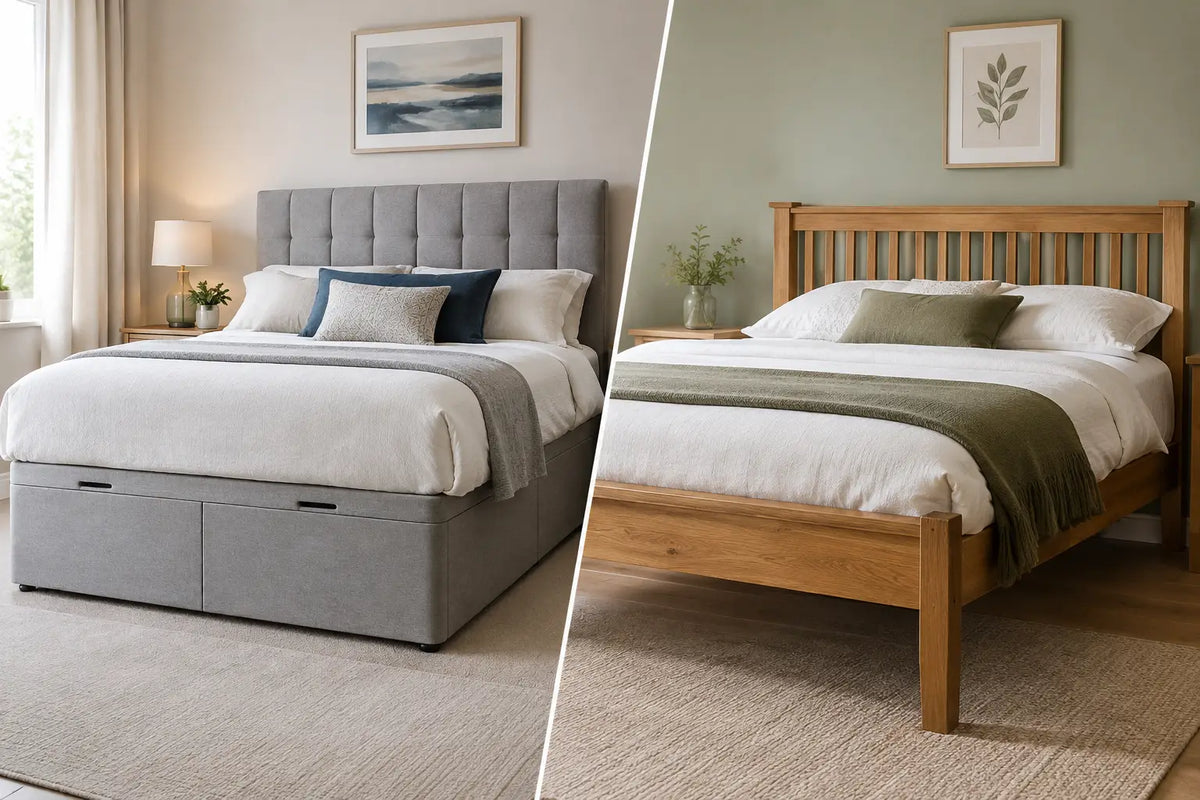
A bed is rarely just a place to sleep. It establishes the scale of the room, frames the view from the doorway and determines how comfortably the space works each day. The divan bed vs bedstead question therefore deserves more consideration than a simple preference for one silhouette over another. Both can form the foundation of an exceptional bedroom - but they suit different interiors, practical requirements and ways of living.
A divan offers discreet efficiency and a composed, upholstered finish. A bedstead provides architectural presence, visible craftsmanship and a more furniture-led character. The right choice is the one that feels considered from every angle: beneath the mattress, beside the bedside tables and when the room is viewed as a whole.
What separates a divan bed from a bedstead?
A divan bed consists of a purpose-built, upholstered base designed to support the mattress. In the UK, it is commonly supplied in two sections for larger sizes, making it easier to deliver and position upstairs. The base may sit on castors, glides or elegant low feet, and it can be configured with integrated drawers or an ottoman-lift storage compartment. A separate headboard may be fixed to the base, allowing the scale, fabric and detailing to be selected with real precision.
A bedstead is a more conventional bed frame. It has a headboard, side rails and a footboard or open foot end, with the mattress resting on a slatted or platform support inside the frame. Its structure remains visible, whether expressed through upholstered rails, timber, metal, or a combination of materials. This gives a bedstead a stronger sense of outline and often makes it the natural choice where the bed should read as a distinct piece of furniture.
Neither is inherently more luxurious. Quality lies in the proportion of the design, the integrity of the frame, the upholstery work, the support beneath the mattress and the way every element has been finished.
Divan bed vs bedstead: the details that shape your choice
Storage and the way the room functions
For bedrooms where wardrobes are carefully planned rather than generous by default, a divan can be remarkably useful. Drawer storage is convenient for spare linens, seasonal throws or folded nightwear, provided there is enough clearance at the sides of the bed to open them fully. It is particularly well suited to larger rooms with a clear circulation zone around the bed.
An ottoman divan provides a different kind of practicality. The entire mattress platform lifts to reveal a substantial enclosed storage space, making it ideal for bulky bedding, luggage or items that should remain out of sight. Choose the opening direction with care. Side-opening mechanisms are often useful where access at the foot of the bed is limited, while end-opening designs suit rooms with a more open layout.
A bedstead usually leaves space beneath the frame, which creates visual lightness and makes floor cleaning easier. That under-bed area can accommodate storage boxes, but it is not as polished or capacious as a properly integrated ottoman. If a calm, uncluttered room is the priority, a divan tends to provide the more elegant answer.
Presence, proportion and interior character
A bedstead creates a deliberate frame around the mattress. Its rails and footboard add depth, and that depth can be especially handsome in a principal bedroom with generous proportions. An upholstered bedstead with a tailored headboard, soft corner shaping and a low foot end can feel quietly substantial without becoming overly formal.
The visual strength of a bedstead does require space. In a compact bedroom, projecting rails and footboards can interrupt the route around the bed or make the room feel more tightly furnished. Measure not only the mattress size but also the full external dimensions, including the depth of a deeply upholstered headboard.
A divan is often more discreet at mattress level, allowing an upholstered headboard to take centre stage. This can be a beautiful solution where the room calls for a tall, panelled or gently curved headboard without the added visual weight of rails and a footboard. It also gives greater freedom to pair the bed with a statement bench, chaise or upholstered occasional chair, rather than asking the bed frame to carry every design detail.
Mattress support and sleep comfort
The bed base affects the feel and long-term performance of a mattress. A well-made divan base provides an even, stable platform and is typically designed to work with the mattress dimensions it is sold alongside. This makes it a dependable choice for substantial pocket-sprung mattresses, layered natural fillings and other heavier constructions.
With a bedstead, inspect the support system closely. Sprung slats can introduce a little additional flexibility, while solid slats or a platform base create a firmer, more stable feel. Slat spacing matters too: excessive gaps may compromise mattress support over time. A premium mattress deserves a frame engineered to carry it correctly, not simply a handsome exterior.
Always confirm the mattress manufacturer's requirements before making a final choice. This is particularly relevant for mattresses with deep upholstery, natural fillings or considerable weight. The most attractive bed is not the right bed if its base does not properly support the mattress you have chosen.
Headboard design and fabric continuity
A divan is exceptionally adaptable when a tailored upholstered scheme is the ambition. Because the base and headboard can be selected separately, it is possible to create a restrained tonal look or introduce a contrasting texture without changing the bed's underlying structure. A wide, floor-standing headboard can extend beyond the bed sides to give bedside tables a more integrated, designed-in appearance.
A bedstead offers a more unified composition. Its headboard, rails and sometimes footboard are upholstered in the same fabric, creating a continuous line around the mattress. This can look wonderfully resolved in bouclé, velvet, wool or a finely woven linen blend, particularly when the room has a more decorative, layered character.
In either case, request fabric swatches before committing. Light changes throughout the day, and a fabric that appears warm grey in one setting may reveal cooler undertones beside existing curtains, carpet or painted joinery. Consider not only colour but also texture, durability and how the material will sit alongside cushions and bed linen.
Choosing for your room rather than a showroom
A divan often suits a bedroom that must work hard without looking utilitarian. It is a sensible choice for a London flat, a guest bedroom with limited storage, or a principal suite where the design emphasis is on a generously scaled headboard and calm, uninterrupted surfaces. A quality ottoman divan is particularly persuasive when practical storage must be completely concealed.
A bedstead is often at its best in a larger bedroom, a period property or an interior where furniture should have a more sculptural presence. It brings definition to the room and can make a high-ceilinged or generously proportioned space feel grounded. If you value the look of visible legs, open floor space and an upholstered frame with a clear outline, it is likely to feel more satisfying than a divan.
There are exceptions. A low-profile bedstead can work beautifully in a smaller room, just as a divan with a substantial bespoke-style headboard can command a large suite. The key is to assess the full composition: mattress height, bedside-table scale, window position, walking clearance and the view from the room entrance.
The quality cues worth paying for
At this level of purchase, examine what is not immediately obvious. A divan should have a stable, properly upholstered base, reliable fittings and a lift mechanism that operates smoothly without feeling strained. Storage drawers should run cleanly, align neatly and feel substantial enough for regular use.
For a bedstead, look for a solid internal frame, carefully tensioned upholstery, secure rail connections and evenly spaced mattress support. The fabric should be expertly applied around corners and edges, without puckering, rippling or loose areas that will quickly detract from the finish. Details such as piping, buttoning, stitching and foot design should look intentional rather than decorative afterthoughts.
Delivery also deserves attention. Access routes, stair turns and lift dimensions can influence whether a one-piece headboard, split divan base or dismantled bedstead is most practical. White-glove delivery, assembly and old-bed removal turn an otherwise complicated changeover into a straightforward appointment - particularly when a new mattress is arriving at the same time.
A considered final choice
Choose a divan when concealed storage, mattress support and a tailored headboard scheme matter most. Choose a bedstead when you want visible structure, furniture-like presence and an upholstered silhouette that defines the room. For either route, start with the room's proportions and the mattress you genuinely want to sleep on, then allow fabric, headboard height and finishing details to create the sense of quiet luxury that makes retiring for the evening a pleasure.
Share:
Why Order Free Fabric Swatches Before Your Bed
How to Measure Headboard Height Properly