

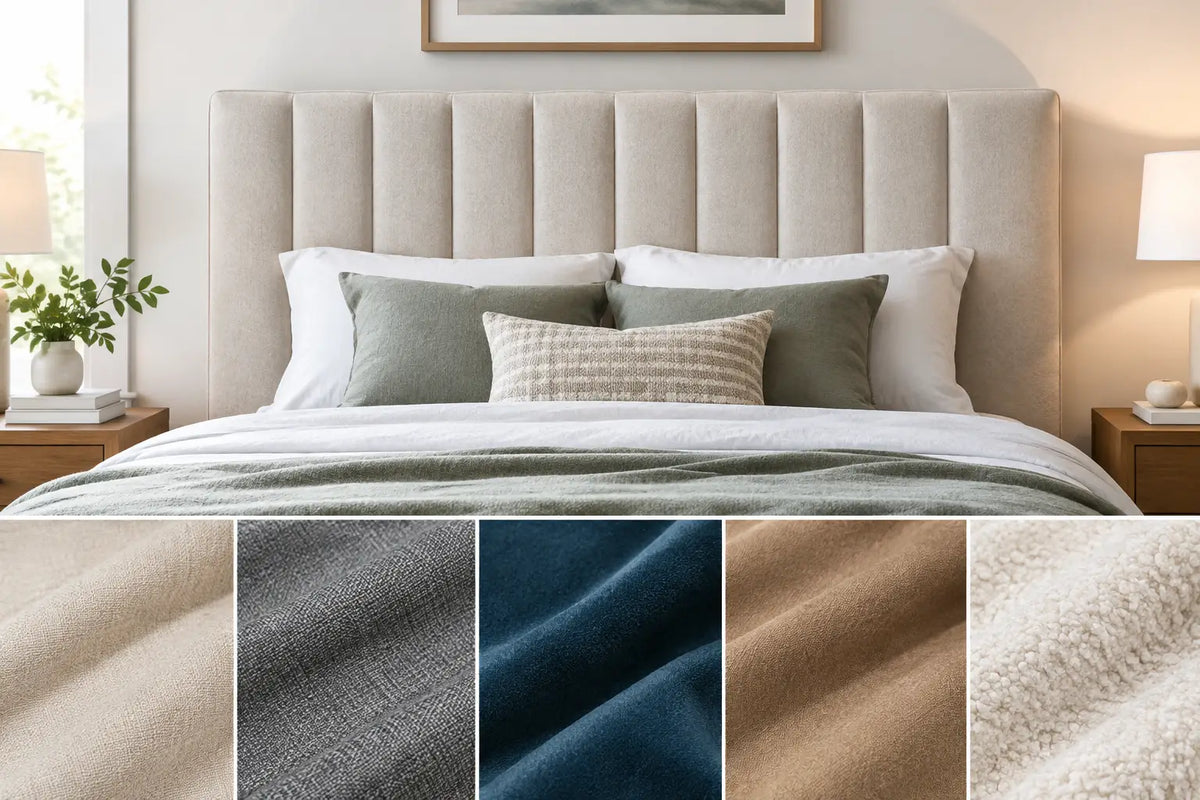
A headboard is often the first element seen when entering a bedroom, yet its fabric has an even greater influence than its silhouette. The right headboard fabric options can introduce softness to an architectural space, bring a scheme together, or give a simple divan base the presence of a fully considered bed. The wrong choice can feel flat, overly formal or impractical for how the room is actually used.
For a bedroom intended to feel composed rather than merely decorated, begin with material quality. Consider how a fabric handles light, how it feels at close range, the depth of its colour and its suitability for everyday life. A generous, upholstered headboard deserves the same level of attention as curtains, a favourite chair or a tailored suit.
Headboard fabric options and the mood they create
Fabric is not simply a finish. It determines whether a headboard recedes quietly into the room or becomes its defining feature. In a principal bedroom, this decision is especially valuable: the bed is likely to occupy the largest visual area, and the headboard sets the tone long before bedding is added.
Linen and linen-look weaves
Linen is prized for its relaxed elegance. Its naturally irregular weave gives a headboard texture without excessive formality, working particularly well in country houses, coastal homes and London bedrooms where calm, layered interiors are preferred. Shades such as flax, stone, oat and soft grey have a quiet authority and sit beautifully alongside timber, aged brass and wool carpets.
Pure linen can crease and show variation, which is part of its character rather than a flaw. For a more tailored finish, a high-quality linen-blend or linen-look upholstery fabric can offer the same visual lightness with greater resilience. This makes it a considered choice for upholstered beds used daily, particularly where the headboard is regularly leaned against for reading.
Velvet for depth and drama
Velvet has a particular ability to absorb and reflect light, giving colour a richness that plain woven fabrics cannot easily match. A deep olive, midnight blue, aubergine or tobacco velvet headboard can create a cocooning effect in a larger bedroom, while muted shades of putty, rose or mineral grey feel more restrained.
The trade-off is visual movement. Velvet’s pile changes direction when brushed, so the tone may appear lighter or darker across the surface. This is entirely normal and contributes to its appeal, but it is worth appreciating before committing to a large statement headboard. Velvet is excellent for a bedroom where the bed is intended to feel glamorous and inviting, though a family room or sun-filled space may call for a practical performance velvet rather than a more delicate decorative quality.
Wool and wool-blend upholstery
Wool is one of the most quietly luxurious choices for a headboard. It offers a soft, substantial texture, a naturally warm hand and a depth of colour that feels enduring rather than seasonal. Fine wool fabrics are particularly suited to architectural bedrooms, period properties and interiors with restrained palettes of mushroom, charcoal, forest green or warm ivory.
A wool or wool-blend headboard is also highly forgiving in daily use. The surface tends to disguise minor marks better than a smooth pale fabric, while its texture lends warmth to rooms with stone floors, plaster walls or contemporary joinery. Its appeal lies in understatement: a beautifully upholstered wool headboard can look exceptional without asking for attention.
Bouclé and tactile textured fabrics
Bouclé and similar looped weaves bring a sculptural quality to the bed. They are especially effective on curved, winged or generously padded headboards, where the fabric’s texture emphasises proportion and upholstery detail. In cream, biscuit, pale taupe or soft camel, bouclé can make a bedroom feel considered and contemporary without becoming cold.
However, texture deserves a practical assessment. A loosely woven bouclé may be less suitable in a household with pets that scratch or children who treat the bed as a climbing frame. A tightly constructed textured fabric offers much of the same look with less vulnerability. Requesting a swatch is essential here, because photographs rarely convey the density, softness and scale of the weave accurately.
Cotton, chenille and tailored plain weaves
Cotton upholstery and finely woven plain fabrics offer a classic, adaptable route. They suit almost every headboard shape, from a neat square-edged panel to an imposing floor-standing design. A quality cotton-blend weave in ivory, pebble, mushroom or dove grey allows the silhouette of the headboard to lead, making it a sound choice where the room already contains patterned wallpaper, art or richly detailed joinery.
Chenille has a softer, fuller surface and is often chosen for its inviting feel. It can be a particularly good alternative to velvet when you want warmth and gentle lustre but prefer a more relaxed finish. As with any pale fabric, ask about cleanability and consider how close the bed sits to windows, radiators and dressing areas.
Choosing colour, scale and texture together
The most successful fabric choice is rarely made in isolation. A small, tailored headboard may benefit from a bolder colour or a more expressive weave, while a tall, wide design often looks most elegant in a quieter fabric. The larger the upholstered surface, the more apparent the fabric’s undertone becomes.
A pale grey can lean blue in a north-facing room; a beige can look unexpectedly yellow beside crisp white bedding; a green velvet may become almost black after dusk. View fabric swatches in the bedroom at different times of day and place them against the wall colour, flooring and proposed bed linen. This is a small step that prevents expensive assumptions.
Consider contrast carefully. A tonal scheme, such as a warm stone headboard against mushroom walls, creates a tranquil hotel-like result. A deeper headboard against pale walls gives the bed definition and can make a large room feel more intimate. Pattern may work beautifully, but it requires confidence and restraint. If the fabric is patterned, allow the headboard shape and surrounding bedding to remain relatively simple.
Practical questions worth asking before ordering
Luxury should be enjoyed, not nervously preserved. Before selecting a fabric, think about how the room functions. Is the headboard purely decorative, or is it used every evening as a backrest? Does the household include pets, young children or breakfast-in-bed habits? Is the room a rarely used guest suite, or a busy principal bedroom?
For everyday practicality, ask about rub count, stain resistance and recommended cleaning. A higher rub count can indicate suitability for frequent use, but it is not the sole measure of quality. Construction, fibre content and finish matter too. A refined natural fabric may be ideal for a carefully used bedroom, whereas a durable treated weave may be the better choice for a home with a more active routine.
It is also sensible to consider the headboard’s form. Deep buttoning, fluting and winged sides create shadow and character, but they need fabric that drapes and upholsters well. A crisp linen-look fabric can show clean lines beautifully; velvet enhances channels and curves; textured weaves give broad upholstered panels more visual interest.
Why samples make the difference
At this level, fabric selection should be tactile. A swatch lets you see the true shade, feel the weight of the cloth and understand whether its surface suits the room’s lighting. It also helps distinguish between fabrics that appear similar on screen but feel entirely different in person: one may be dry and tailored, another soft and enveloping.
At The Natural Collection, a considered fabric choice is part of creating a bed that belongs naturally in the room rather than simply filling it. Allow the headboard to complement the mattress, base, storage requirements and wider scheme, especially when choosing a coordinated upholstered bed.
The best fabric is the one that continues to please after the room is lived in: beautiful under morning light, comfortable at the end of the day and entirely at ease with the way you call the bedroom home.
Share:
A Small Bedroom Storage Transformation That Lasts
Are Wool Mattresses Cooler for Better Sleep?