

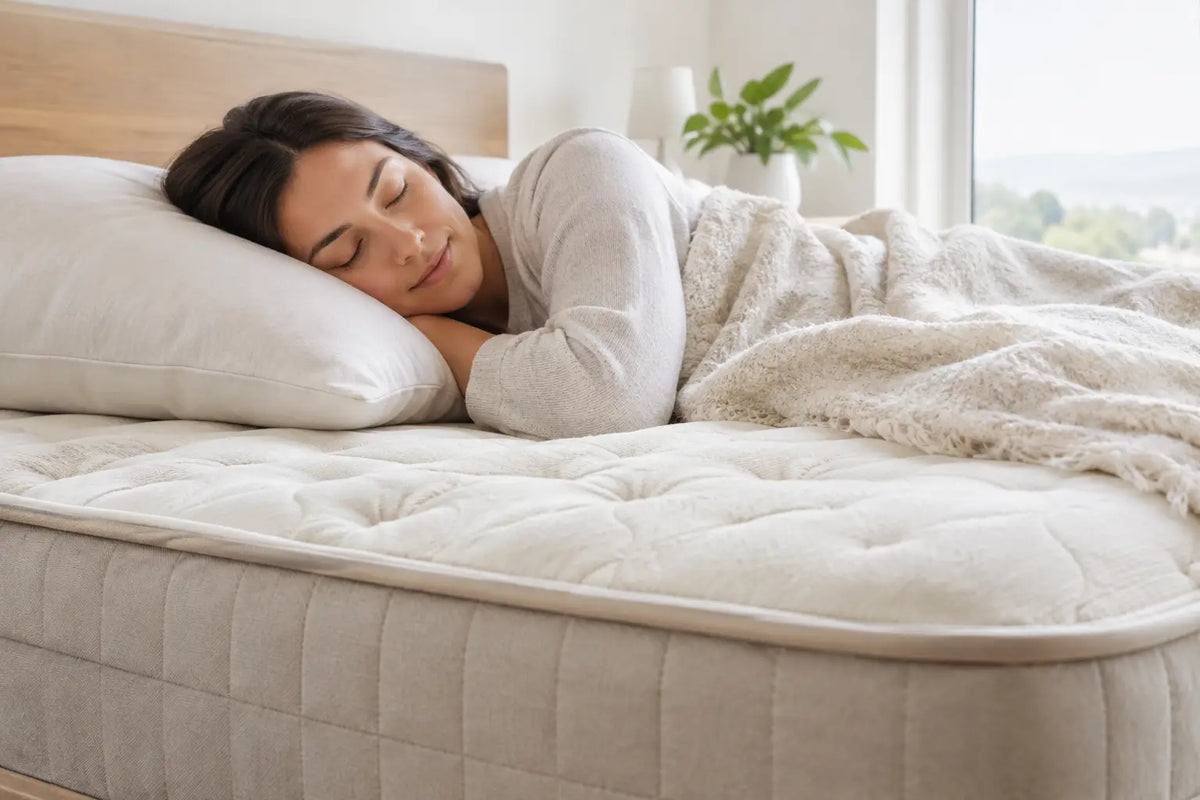
A bedroom should feel composed at every hour, not merely look considered in daylight. If you regularly wake too warm, the question ‘are wool mattresses cooler’ is a sensible one, particularly when choosing a mattress intended to serve a beautifully finished home for many years. Wool does not create the chilled sensation of a cooling gel. Its distinction is more sophisticated: it helps maintain a steadier, drier and more comfortable microclimate around the body.
For many sleepers, that makes a well-made wool mattress a cooler choice than dense synthetic comfort layers or all-foam designs. Yet the fibre alone is not the whole story. The mattress construction, upholstery depth, support system, bed base, bedding and even the room itself all influence how warm you feel overnight.
Are wool mattresses cooler than other mattresses?
In most cases, yes - especially compared with mattresses built around substantial layers of conventional memory foam. Wool is naturally breathable and hygroscopic, meaning it can absorb water vapour from the air without immediately feeling damp. As your body releases heat and moisture during sleep, wool fibres help move that moisture away from the skin and release it gradually.
This matters because overheating is often less about temperature alone than trapped humidity. When moisture sits close to the body, bedding can feel clammy, and the warmth beneath the duvet becomes more noticeable. Wool helps keep the sleep surface feeling fresher and less oppressive, which is particularly welcome for couples, naturally warm sleepers and bedrooms that receive late-afternoon sun.
Its crimped fibre structure also creates countless tiny air pockets. These spaces allow air to circulate while providing gentle insulation when the room cools. The result is not an icy sleep surface. It is a mattress that is less prone to holding heat, while remaining comfortable through the changing temperatures of a British year.
Cooler does not mean cold
A common misconception is that a breathable natural mattress will feel cold in winter. Quality wool is valued precisely because it adapts. It can assist with heat and moisture management when conditions are warm, then retain enough insulating air to prevent the sharp chill sometimes associated with leaner, highly ventilated mattress designs.
That balanced character suits a principal bedroom where comfort should not need to be reconsidered with every season. Rather than relying on a dramatic cooling feature, wool offers a quieter, more enduring form of temperature regulation.
Why wool feels more comfortable overnight
The finest sleep environments balance pressure relief, support and climate control. Wool contributes mainly to the latter, although its soft, springy loft can also add a plush and inviting surface feel.
Unlike a non-breathable sheet of foam, layered wool upholstery allows air to move between fibres. This can reduce the sensation of being held in one warm pocket of material. It is a particularly attractive quality for sleepers who appreciate the embracing comfort of an upholstered mattress but dislike the close, enclosed feel that some foam-heavy models produce.
Wool is also naturally odour resistant when properly cared for. By helping to manage moisture, it creates a less hospitable environment for the stale smells that can develop in a poorly ventilated bed. This is not a substitute for a mattress protector, regular airing or thoughtful housekeeping, but it is one of the reasons natural fillings remain highly regarded in exceptional mattress making.
The construction matters as much as the wool
A mattress described as ‘wool’ can vary greatly in performance. A modest wool quilt placed above deep, heat-retaining foam will not behave like a mattress with generous layers of loose, breathable wool over a responsive spring system. For a purchase at this level, it is worth looking beyond the label and considering the complete specification.
Natural upholstery layers
Wool is often paired with materials such as cotton, horsehair, cashmere, silk or plant-based fibres. Each brings a slightly different quality. Cotton offers familiar freshness and breathability, while horsehair is prized in traditional mattress making for its spring, durability and exceptional air circulation. Cashmere and silk can add a refined softness and help regulate warmth, although they are usually used in smaller quantities as luxury comfort fibres.
The arrangement and amount of these layers affect the mattress feel. More natural upholstery generally creates a deeper, more tactile sleeping surface, but it can also require occasional turning or rotating to preserve an even finish. This care is part of owning a finely upholstered mattress, much like maintaining other considered materials in the home.
Springs and airflow
Pocket springs are an excellent partner for wool because the spaces around individual springs encourage ventilation from within the mattress. A well-engineered pocket-sprung construction can support the body precisely while allowing air and moisture to disperse more readily than in a solid foam core.
Open coil systems can also permit airflow, but they rarely offer the same tailored support or motion isolation. At the premium end of the market, the number, calibre and arrangement of springs deserve attention. More springs alone do not guarantee a better mattress, but a carefully layered spring system can create the poised support and longevity expected from a serious investment.
Foam is not automatically unsuitable
Foam is not inherently warm or inferior. Modern foams can be ventilated, perforated or formulated to manage temperature more effectively than older designs. They can also offer excellent pressure relief, particularly for side sleepers. However, if you are consistently hot at night, a mattress dominated by dense foam is usually less forgiving than one with breathable natural upholstery and springs.
For some people, the ideal solution is a hybrid construction: supportive pocket springs, a measured layer of high-quality foam for pressure relief, and wool close to the surface for moisture management. The right choice depends on your preferred feel as much as your temperature.
What can make a wool mattress feel warmer?
Even the best wool mattress cannot compensate for every source of heat in the bedroom. A solid platform base, a non-breathable mattress encasement, very high tog bedding or a heavy synthetic protector can reduce the benefits of breathable upholstery.
An upholstered divan base is often an elegant and supportive choice, but it should be well made and properly ventilated. Where a mattress is designed for a slatted base, the spacing and quality of the slats matter. A bed is a complete system, not simply a mattress placed on a frame, and the base should support both the mattress and its ability to air naturally.
Your bedding has an equally direct effect. A breathable cotton or linen sheet, a suitably weighted natural-filled duvet and a quality protector can preserve the feel of the mattress far better than plastic-backed alternatives. For those who sleep especially warm, a lightweight wool duvet is worth considering: it can manage moisture effectively without the heavy, closed-in feeling associated with some synthetic fillings.
Room temperature also matters. A beautiful bedroom benefits from good ventilation, considered curtains or blinds, and a sensible overnight temperature. If you are waking overheated in a south-facing room beneath a very warm duvet, changing the mattress may help, but it will not be the only answer.
Choosing the right wool mattress for your sleep style
Warm sleepers should generally look for a pocket-sprung mattress with substantial natural fillings, rather than choosing wool only as a superficial finishing layer. Ask how the comfort layers are arranged, whether the mattress is hand tufted, and whether it needs turning. Tufting can keep generous natural fillings secure and stable, though it often creates a more traditional, gently undulating surface than a smooth-topped mattress.
Couples should consider individual comfort needs alongside temperature. If one partner sleeps warm and the other feels cold, wool can be an excellent compromise because it is adaptable rather than aggressively cooling. The mattress should still provide enough space, so a king size or super king size can make a notable difference to both sleep quality and temperature comfort.
Those who prefer a very soft, enveloping sensation may need to balance that preference with breathability. Deep pillow tops and dense cushioning can feel sumptuous, but they may retain more warmth than a mattress with a flatter, naturally upholstered finish. A luxury mattress need not feel excessively soft to feel indulgent. Often, the most convincing comfort comes from calm support, resilient materials and an impeccably finished surface.
A considered choice for a better-rested bedroom
Wool mattresses are cooler in the sense that matters most: they are naturally better at dispersing moisture and avoiding trapped heat than many synthetic-heavy alternatives. They are not a shortcut to an artificially cold bed, nor should they be chosen on fibre content alone. The quality of the upholstery, spring system, base and bedding will determine the experience night after night.
When selecting a mattress for a well-appointed bedroom, allow yourself the time to consider how you sleep, not simply how a mattress feels for five minutes. A thoughtfully specified wool mattress can bring a rare combination of breathable comfort, lasting refinement and reassuring all-season ease - the kind of detail that makes retiring for the evening feel quietly exceptional.
Share:
Headboard Fabric Options for a Refined Bedroom
Luxury Bedroom Makeover Examples That Feel Personal