

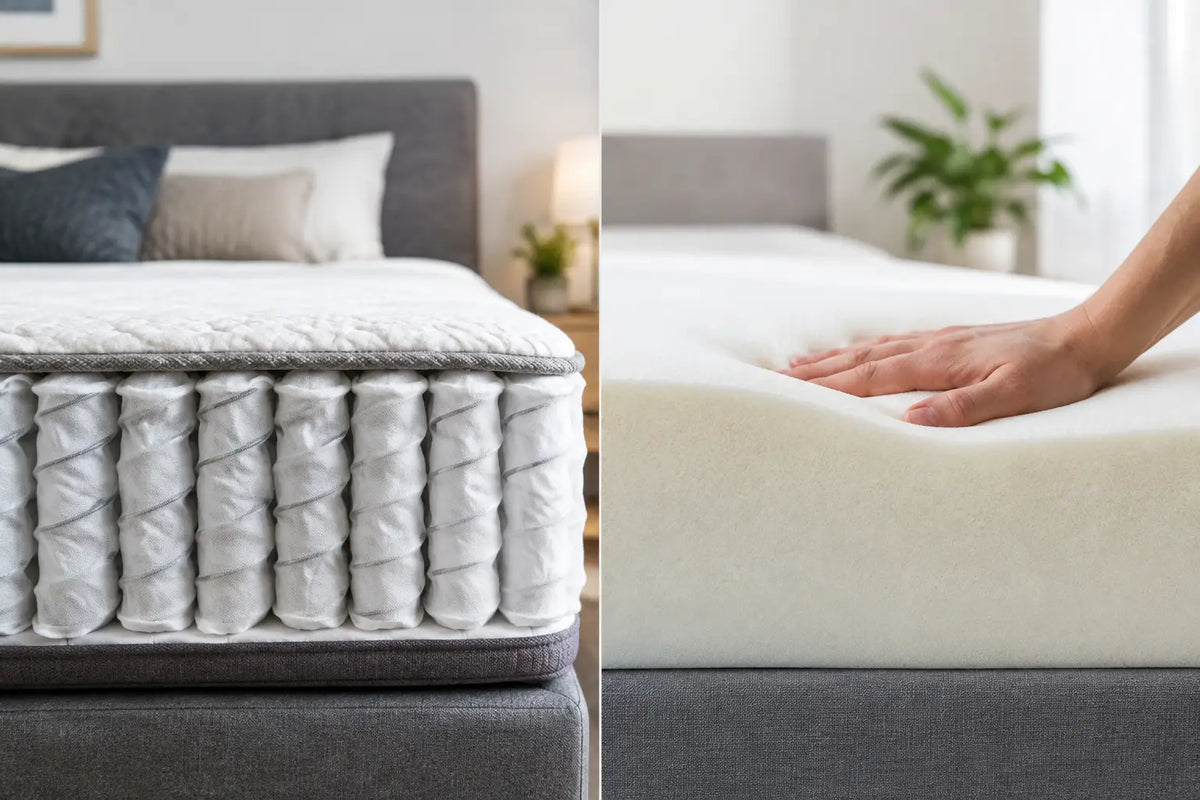
A mattress may sit beneath exquisite bedding and a beautifully upholstered headboard, but it determines how the room feels when the day is over. In the question of pocket sprung vs memory foam, the better choice is not simply a matter of price or prevailing fashion. It is about the particular balance of support, temperature, movement and comfort that suits you and your bedroom.
For many considered homes, the answer is neither wholly one nor the other. A well-made hybrid mattress can unite individually responsive springs with carefully selected comfort layers. Understanding the qualities of each material first, however, makes it far easier to choose with confidence.
Pocket sprung vs memory foam: the essential difference
A pocket sprung mattress contains hundreds, and often thousands, of individual springs. Each spring sits in its own fabric pocket and moves independently when weight is applied. Rather than responding as one broad surface, the mattress can adapt more closely to the contours of two different sleepers.
Memory foam is a pressure-relieving material that softens in response to body heat and weight. It gently moulds around the body, spreading pressure across a wider area. The sensation is more enveloping than spring-led support: you settle into the mattress rather than resting prominently on its surface.
Neither construction is inherently superior. A generous spring count alone does not guarantee quality, just as a deeper foam layer is not automatically more comfortable. The calibre of the materials, the way layers are arranged, and the intended feel all matter.
The character of a pocket sprung mattress
Pocket springs appeal to those who enjoy a more buoyant, traditionally supportive sleep surface. Because the springs work separately, they can respond where pressure is placed, offering useful support around the shoulders, hips and lower back without making the entire mattress dip.
This construction also allows air to circulate more freely than many all-foam designs. For sleepers who tend to feel warm at night, or for bedrooms that retain heat, that added breathability can be particularly welcome. A mattress with natural fillings such as wool, cotton, cashmere or horsetail may further enhance moisture management while bringing a beautifully composed, resilient feel.
There is also an ease of movement to pocket springs. If you turn frequently, prefer to sleep nearer the edge, or simply dislike the feeling of being held in one position, springs usually make changing position feel more effortless. The feel varies substantially by tension: a softer model offers greater initial give, while a firmer tension provides a more lifted, structured sensation.
For couples, independent springs can limit the transfer of movement across the mattress. They will not eliminate it completely, particularly on a more responsive surface, but a considered pocket sprung design can ensure that one sleeper’s movements are less disruptive to the other.
The character of memory foam
Memory foam is valued for its close contouring and pressure relief. It is often an excellent option for people who sleep on their side, as it can cushion the shoulder and hip while helping the spine remain in a more neutral position. Those who experience pressure points from a firmer, more immediate surface may find its slow response especially soothing.
It also performs well at reducing motion transfer. The foam absorbs movement rather than transmitting it through springs, which can be beneficial if one partner rises earlier or changes position regularly during the night.
The trade-off is feel. Some sleepers appreciate the secure, cocooning comfort of memory foam, while others find it less agile when turning over. Traditional memory foam can also retain more warmth than a naturally filled, spring-led mattress. Modern formulations may include open-cell structures, cooling gels or breathable covers, but these features should be viewed as part of the whole construction, rather than a substitute for a properly ventilated bedroom and suitable bedding.
A memory foam mattress may also take a little longer to feel familiar. Its response is deliberately more gradual, and room temperature can influence its initial firmness. In a cool bedroom, it may feel firmer at first; as it warms, it becomes more yielding.
Where hybrids offer a more tailored answer
The most luxurious choice is often not an either-or decision. A hybrid mattress pairs a pocket sprung core with foam, latex or natural comfort layers above it. This can provide the individualised support and airflow of springs while adding the pressure relief associated with memory foam.
The proportion is crucial. A hybrid with a modest layer of memory foam tends to retain a more lifted, responsive feel. A deeper foam comfort layer will feel closer to an all-foam mattress, with more contouring and reduced movement transfer. If you are drawn to the benefits of memory foam but do not wish to feel enclosed by it, this middle ground is often worth considering.
For a refined bedroom scheme, a hybrid also offers practical versatility. It can suit partners with different preferences more readily than a mattress at either extreme, particularly when the chosen tension is appropriate for the combined sleeping arrangement.
Support, body weight and sleeping position
Your preferred sleeping position should guide the decision, but it should not dictate it in isolation. Side sleepers often appreciate softer comfort layers around the shoulder and hip. Back sleepers generally need an even, stable surface that supports the lumbar area without allowing the pelvis to sink too deeply. Front sleeping can require a firmer, flatter feel to avoid excessive arching through the lower back.
Body weight affects how deeply you engage with any mattress. A lighter sleeper may find a medium mattress sufficiently supportive, while a heavier sleeper may need a firmer tension or a more substantial spring system to avoid sinking too far into the comfort layers. Couples should consider both people, rather than selecting solely for the person with the strongest preference.
This is where trying a mattress carefully, or seeking individual guidance, is more useful than following a simple firmness label. Medium, firm and extra firm are not universal standards. One manufacturer’s medium can feel notably different from another’s, depending on its springs, fillings and overall depth.
Practical considerations for an elegant bedroom
A premium mattress deserves the right foundation. A pocket sprung or hybrid design should be paired with a supportive base that allows it to perform as intended, whether that is a quality divan, a suitable slatted frame or an upholstered bed with a correctly specified platform. The base influences airflow, edge support and long-term comfort more than many buyers expect.
Consider the mattress depth in relation to the bed’s proportions too. A deep, generously layered mattress can lend presence to a tall upholstered headboard and create the inviting, hotel-like finish many owners want. It also affects the sheets and protectors you will need, so measure before investing in bespoke-quality bed linen.
In a principal bedroom, look beyond the mattress alone. Temperature can be managed through breathable duvet fillings, layered linens and thoughtful room ventilation. Motion disturbance may be reduced with the right mattress construction, but a considered bed base and a well-balanced sleep environment complete the experience.
How to make the final decision
Choose pocket springs if you value responsive support, easier movement and a cooler, more traditionally buoyant feel. Choose memory foam if pressure relief and minimal partner disturbance are your first priorities, and you enjoy a closer, more cushioning sleep surface.
A hybrid deserves close attention if you want both qualities in a single mattress. It is particularly compelling for couples, for those transitioning from one mattress type to another, and for anyone seeking a composed balance rather than a pronounced foam or spring sensation.
At The Natural Collection, the right choice should feel considered rather than complicated. Think about how you sleep, how warm your room feels, the support you prefer and the bed you are creating around it. The finest mattress is the one that quietly makes every detail of your bedroom feel more restorative.
Share:
How to Choose Mattress Firmness for Better Sleep
The Best Mattress for Couples Who Sleep Differently