

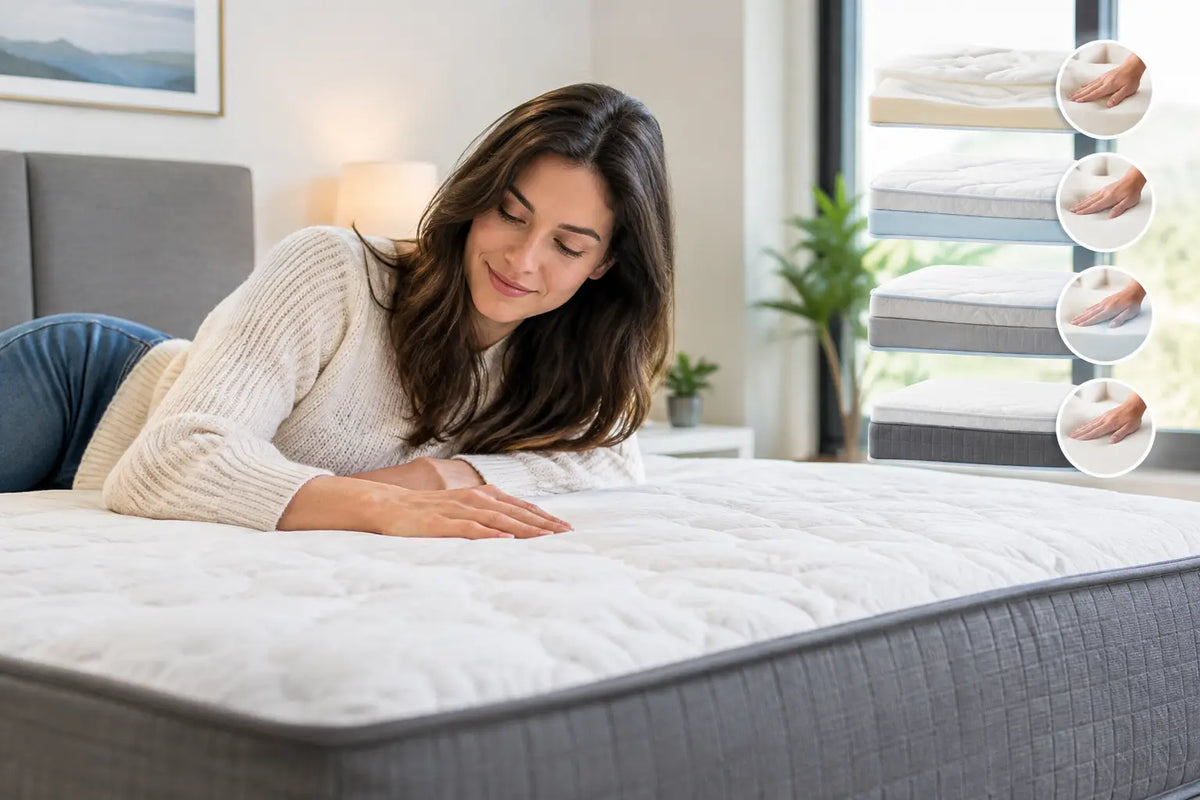
A mattress can look beautifully considered beneath tailored linens and an upholstered headboard, yet still leave you waking with a tight lower back or a shoulder that has not properly settled. Knowing how to choose mattress firmness is less about selecting the firmest option available and more about finding the level of comfort that keeps your body supported in its natural alignment, night after night.
For a considered bedroom scheme, this choice deserves the same attention as fabric, proportion and finish. Firmness influences how you feel each morning; the materials, craftsmanship and bed base influence how that feeling endures.
What mattress firmness actually means
Firmness describes the immediate feel of a mattress when you lie on it: how much it gives beneath your hips, shoulders and back. It is commonly expressed on a spectrum from soft to firm, though there is no universal industry scale. One maker's medium-firm can feel noticeably different from another's, particularly where natural fillings, pocket springs or layered foams are involved.
It is also useful to separate firmness from support. A softer mattress can be highly supportive if its spring system and comfort layers hold your spine in a balanced position. Equally, a very firm mattress may feel secure at first but create pressure at the shoulders or hips, encouraging your body to compensate through the night.
The right choice allows the heavier parts of your body to settle slightly while preventing your waist and lower back from dropping too far. Comfort is personal; alignment is the principle worth protecting.
How to choose mattress firmness for your sleeping position
Your usual sleeping position is the most useful place to begin, because it determines where pressure is concentrated and how much contouring you need.
Side sleepers usually need more pressure relief
When you sleep on your side, your shoulder and hip carry much of your weight. A soft or medium mattress often suits this position because it gives those points room to settle, helping to keep the spine level rather than pushing it upwards. The aim is a cushioned surface with underlying support, not a mattress that allows the hips to sink unchecked.
Those with a broader shoulder frame may prefer a little more depth in the comfort layers. Natural fibres such as wool, cotton, cashmere or silk can create a responsive, breathable surface, while a carefully engineered pocket-spring core provides the structure beneath.
Back sleepers need balanced, even support
Back sleepers generally fare well with a medium or medium-firm feel. The mattress should support the natural curve of the lower back without creating a hollow beneath it, while allowing the shoulders and pelvis to settle evenly.
If you wake with discomfort across the lumbar area, do not automatically move to the firmest model. The issue may be insufficient contouring rather than a lack of support. A medium feel with a more responsive comfort layer can be the more refined solution.
Front sleepers often prefer a firmer feel
Front sleeping places particular demand on the hips and lower back. A medium-firm to firm mattress can help stop the pelvis dipping too deeply, which may otherwise exaggerate the curve of the spine. A lower-profile pillow is often worth considering too, as an overly lofty pillow can strain the neck in this position.
Many people move between positions rather than sleeping in one fixed way. In that case, a medium-firm mattress is frequently the most adaptable starting point: supportive enough for front or back sleeping, with sufficient give for occasional side sleeping.
Body shape matters, but it is not a rulebook
Body weight and build affect how deeply you settle into a mattress. A lighter sleeper may find the same model firmer than someone with a heavier build, simply because they place less pressure on the upper layers. A person with a larger or more muscular frame may prefer medium-firm or firm support to avoid feeling as though they are resting too deeply within the mattress.
That said, choosing by body weight alone is a blunt instrument. Shoulder width, hip shape, sleep position, sensitivity to pressure and personal preference all matter. A slender side sleeper may love a medium mattress with generous natural upholstery, while another person of a similar build may find it too yielding. Use body shape as a useful guide, then let your own comfort decide.
Choose materials as carefully as firmness
A mattress label gives only part of the picture. Two medium-firm mattresses can have entirely different characters depending on their construction.
Pocket springs respond independently across the surface, which can be particularly valuable for couples and for sleepers who need precise support around the shoulders and hips. Higher spring counts are not automatically better, but a well-designed spring system offers a composed, stable feel and encourages less disturbance when someone moves beside you.
Natural fillings bring a distinct sense of ease. Wool is valued for temperature regulation and gentle cushioning; cotton offers freshness and breathability; cashmere and silk can add softness and refinement. These materials often create a more nuanced, responsive surface than a simple firmness label suggests. They may also require occasional turning or rotating, depending on the mattress design, as part of proper care.
Foam comfort layers can deliver excellent pressure relief and a more enveloping feel. For some, that close contour is deeply comfortable. Others prefer the freer, more buoyant movement of a traditionally upholstered sprung mattress. Neither is inherently superior; it is a question of how you want the bed to feel when you settle into it, move during the night and rise in the morning.
For couples, prioritise compromise without settling
A shared bed should not force one person into years of unsuitable comfort. If partners have different builds or sleep positions, a medium or medium-firm mattress with independent pocket springs is often a sophisticated middle ground. It supports a range of sleeping styles while reducing motion transfer.
Where preferences differ significantly, consider whether a mattress is available with split tensions. This allows each side to be tailored separately while preserving the appearance and proportion of one considered piece. It is a particularly sensible option in king and super king sizes, where there is enough width for each sleeper to benefit from a dedicated feel.
Do not overlook bed size in the decision. A larger mattress gives both sleepers more room to change position without disturbing one another, and that added personal space can improve sleep as much as a change in firmness.
Your bed base changes the final feel
A quality mattress should sit on a suitable, properly supported base. A sprung divan can introduce a little additional give, while a platform-top divan or solid slatted frame tends to create a more direct, stable feel. Widely spaced or flexing slats can alter how a mattress performs and, in some cases, may not meet the manufacturer's requirements.
For an ottoman bed, the practical storage mechanism need not compromise comfort, provided the mattress is paired with a base designed to support it correctly. The best bedroom choices are never only about appearance or only about function. They resolve both with quiet confidence.
Test the mattress in a way that reflects real sleep
If you are able to try a mattress in person, lie on it in your normal position for at least ten minutes. Sitting on the edge or pressing a hand into the surface tells you very little. Notice whether your shoulder feels compressed, whether your hips appear to drop lower than your chest, and whether you can relax without constantly adjusting your position.
When buying online, read the construction and care details rather than relying on a single softness description. Consider your current mattress too. If it feels comfortable but has lost its resilience, a similar firmness in a higher-quality construction may be right. If you regularly wake sore, identify where: shoulder discomfort can suggest excessive firmness, while lower-back discomfort may point to too much give or poor support.
A premium mattress is a long-term part of the home, not an impulse accessory. Take time to discuss your sleeping habits, preferred feel and bed base with a knowledgeable adviser before making a decision. The Natural Collection team can help make that conversation straightforward.
The most successful choice is the one that disappears from your thoughts once the lights are out: a mattress that supports you without insistence, complements the calm of the room and lets you wake ready to enjoy it.
Share:
Mattress Buying Guide for a Better Night's Sleep
Pocket Sprung vs Memory Foam: Which Feels Right?