

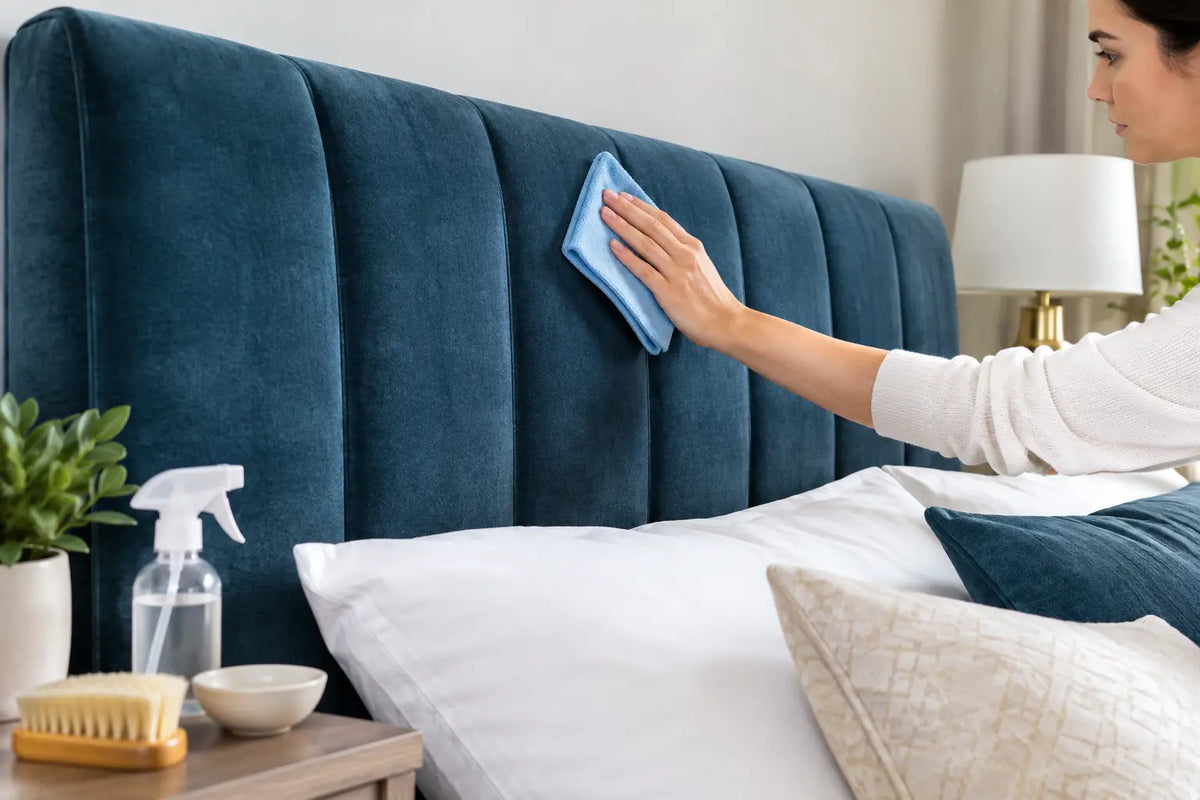
A velvet headboard brings depth, softness and a distinctly tailored finish to a bedroom, but its pile also makes careless cleaning immediately visible. If you are wondering how to clean velvet headboard upholstery without leaving water marks, flattened patches or a change in colour, the guiding principle is simple: use the least moisture and pressure necessary.
Unlike a removable cushion cover, a headboard is often fixed over padding, timber and detailed upholstery work. Buttoning, piping, channel stitching and shaped wings all deserve a more measured approach. Regular, gentle care will preserve its rich appearance far more effectively than an occasional heavy clean.
How to clean a velvet headboard without damaging the pile
Begin by checking the care information supplied with your bed or headboard. The fibre content matters. Cotton, viscose, polyester and performance velvet can look remarkably similar, yet respond differently to water, heat and cleaning agents. If there is a cleaning code, follow it precisely: W usually permits water-based cleaning, S indicates a solvent-based product, WS allows either method, and X means vacuuming or professional cleaning only.
Where there is no label, or the headboard was made in a bespoke fabric, ask the retailer or manufacturer before using a cleaner. This is particularly worthwhile for natural-fibre, hand-finished or deeply coloured velvet, where a poorly chosen product can alter the surface permanently.
Before addressing a mark, remove loose dust. Fit the soft upholstery brush to your vacuum cleaner and use the lowest practical suction setting. Work slowly in the direction of the pile, rather than pressing the nozzle into the fabric. Pay close attention to the top edge, wing returns, seams and the areas beside bedside tables, where dust and hair products tend to settle.
A clean, dry microfibre cloth or a soft clothes brush can then be passed lightly over the velvet in one direction. This restores a more uniform lay to the pile and is often all that is required between more thorough cleans. Avoid vigorous brushing. Velvet is not difficult to care for, but it rewards restraint.
Treating fresh marks with care
The sooner a spill is dealt with, the better the result. Start by blotting the area with a clean white absorbent cloth or plain kitchen roll. Press gently and lift away. Do not rub, as friction can push liquid further into the fibres and create a noticeably lighter or darker patch.
For a small water-based mark on a fabric labelled W or WS, lightly dampen a white cloth with distilled water and a very small amount of pH-neutral upholstery cleaner. The cloth should be barely damp, never wet enough to saturate the fabric. Test the method first on a concealed area, such as the rear edge or beneath the headboard, allowing the test patch to dry fully before proceeding.
Blot from the outer edge of the mark towards the centre, using minimal product. Follow with a second cloth lightly dampened with distilled water to remove any cleaner residue, then blot dry. Leave the room well ventilated and allow the headboard to dry naturally. Once dry, use a soft brush to ease the pile back into its original direction.
It can be tempting to use a hairdryer to speed up the process. Resist it. Direct heat can set a mark, disturb the pile or cause an uneven finish. Equally, do not place bedding or cushions against the headboard until it is completely dry.
Oil, make-up and more persistent stains
Oil-based marks from skincare, hair oils, make-up or food need a different response. First lift any surface residue with the edge of a spoon or a blunt card, taking care not to scrape the velvet. Blot gently with a dry white cloth. Do not apply water, as this can spread an oily mark.
If the fabric is rated S or WS, use only an upholstery solvent approved for that specific fabric type and follow its instructions exactly after patch testing. Solvent products require good ventilation and should be kept well away from flames or heat sources. For an expensive headboard in a pale, darkly saturated or natural velvet, professional assistance is generally the more considered choice.
A dried stain is not necessarily a lost cause, but it should not be attacked with repeated applications of cleaner. Multiple treatments often create a larger tide mark than the original stain. A specialist can assess whether the issue sits on the pile or has travelled through to the padding, then select a suitable low-moisture or solvent method.
A sensible routine for luxury upholstery
Velvet benefits from quiet, consistent attention rather than intensive cleaning. Vacuum the headboard lightly every one to two weeks, or weekly in rooms used by pets, children or anyone with long hair and styling products. This limits the build-up of dust that can dull the fabric and collect in tailored details.
Once a month, inspect the upholstery in daylight. Look for changes in pile direction, small marks along the upper edge, and residue around buttons or seams. A soft brush will often correct minor shading caused by the pile lying in different directions. Velvet naturally reflects light differently as it moves, so not every variation in tone is a stain.
Keep fragranced room sprays, aerosol dry shampoo and body oil away from the headboard where possible. These products can settle as a fine film, particularly on the fabric behind the pillows. Leaving a little space between pillows and the upholstery also reduces transfer from hair, moisturiser and night cream.
What not to use on a velvet headboard
Household shortcuts are rarely kind to upholstered velvet. Avoid soaking the fabric, scrubbing with a sponge, using general-purpose spray cleaners, washing-up liquid, bleach or stain-removal powders. These can leave residue, remove colour or stiffen the pile.
Steam cleaning is also not a universal solution. While some durable synthetic velvets can tolerate carefully controlled steam, others can develop water rings, pile distortion or damage to the adhesive and padding beneath. Only use steam where the fabric supplier expressly permits it, and never apply it directly to buttoned or deeply quilted upholstery.
Do not use a coloured cloth, patterned kitchen roll or abrasive brush. Dye transfer and snagging are avoidable risks. It is also wise to avoid disposable sticky lint rollers on delicate velvet, especially if the pile feels fine or loosely woven. A soft vacuum brush is the safer everyday option.
When to call an upholstery specialist
There is a point at which protecting a beautiful material matters more than resolving a mark at home. Arrange specialist upholstery cleaning for extensive staining, water rings, pet accidents, ink, wax, strong odours or any mark on viscose, cotton, silk-blend or mohair velvet. This is also the right route if the headboard has intricate buttoning, contrast piping or a very pale shade where tonal variation is easily seen.
Choose a cleaner experienced with velvet upholstery, rather than a general carpet-cleaning service. Ask how they will identify the fibre, whether they will test an inconspicuous area, and whether their method uses controlled low moisture or fabric-appropriate solvent cleaning. A reputable specialist will be comfortable discussing the process before treating the piece.
For a considered bedroom scheme, the headboard is more than a practical backrest. It is a refined centrepiece that frames the bed, the textiles and the room's overall mood. A light hand, an appropriate product and prompt professional care where needed will keep its colour, texture and tailored detail looking as composed as the day it arrived.
Share:
How to Choose Mattress Depth for Your Bed
Super King Dimensions for Spacious Bedrooms