

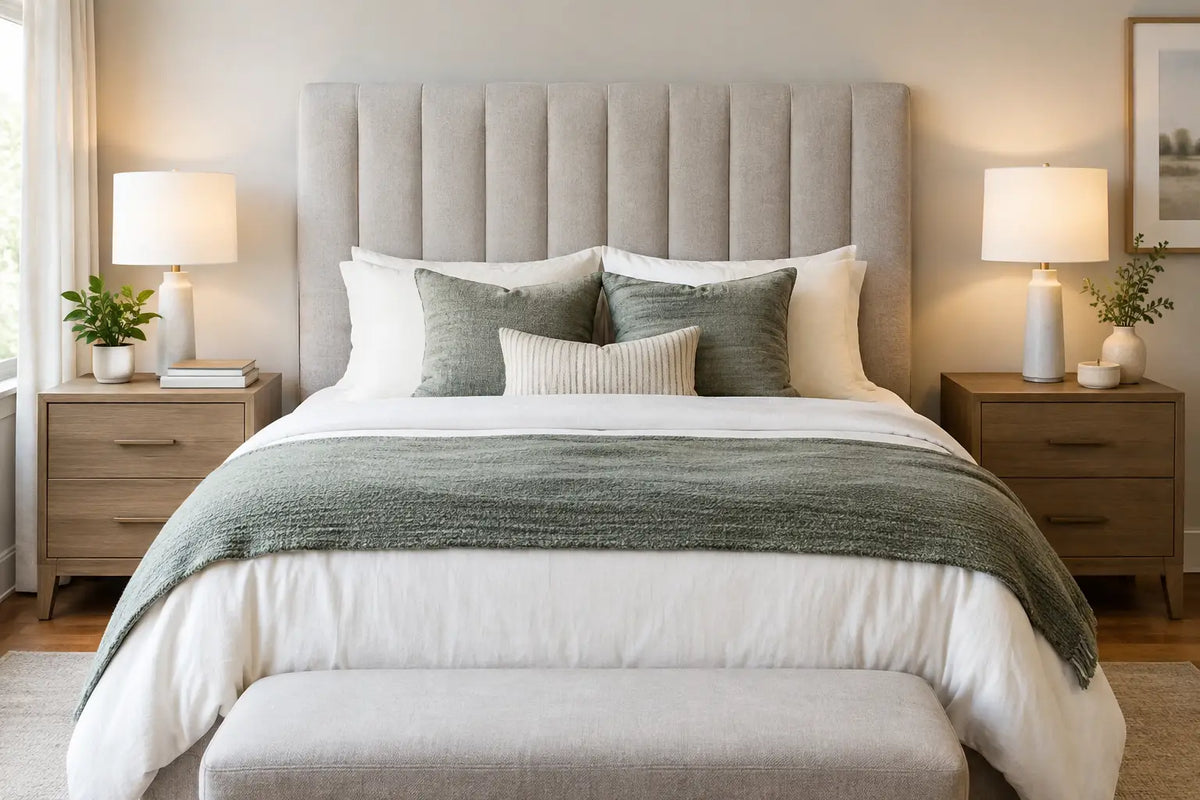
A beautifully made bed can still feel unresolved when the headboard is the wrong scale, height or material. To match a headboard to bed successfully, begin with proportion rather than pattern: the relationship between the mattress, base, bedside furniture and wall will determine whether the room feels quietly composed or unnecessarily busy.
For a principal bedroom especially, the bed is not simply furniture. It is the visual anchor of the room and the place where comfort, craftsmanship and personal taste meet. A considered headboard gives that anchor presence, while also making reading, resting and breakfast in bed noticeably more comfortable.
Match a headboard to bed size first
The simplest rule is that the headboard should correspond to the width of the bed base, using the same UK size. A double headboard belongs with a double divan or bed frame; a king size headboard belongs with a king size base; and a super king headboard belongs with a super king base. This keeps the silhouette neat and intentional.
However, matching the nominal bed size is only the starting point. Many upholstered headboards are designed to extend beyond the mattress and base, either through generous side wings or a wider, panelled construction. This can be particularly effective in a spacious room, where a standard-width headboard may appear a little slight against a broad wall.
For a king size or super king bed, a wider headboard can create the feel of a bespoke hotel suite. The trade-off is clearance. Check that the extended width will not crowd bedside tables, obscure sockets or narrow a natural route around the bed. A luxurious room should never feel as though its furniture has been pressed into position.
Bed frame, divan or ottoman base?
A headboard should also suit the construction of the bed beneath it. A divan base usually takes a strutted or bolt-on headboard, with fittings that allow the height to be adjusted. This is an elegant and practical choice if you are selecting the base and headboard separately.
An upholstered bed frame often has an integrated headboard. Here, the key consideration is visual balance: the upholstery, piping, buttoning and footboard should feel like parts of one design rather than competing details. With an ottoman storage bed, ensure the headboard is securely fitted and does not interfere with the lift mechanism or the room needed to open it comfortably.
Choose height by looking at the whole room
Headboard height has a remarkable effect on the atmosphere of a bedroom. A lower, tailored design feels restrained and contemporary, particularly where there is a picture rail, striking artwork or a window behind the bed. A tall upholstered headboard brings theatre, softness and a strong sense of enclosure, making it well suited to high ceilings and generous master bedrooms.
Do not judge height from the floor alone. What matters is the visible height above the mattress. A deep, pillow-top mattress can conceal more of a low headboard than expected, while a slim mattress leaves much more upholstery on show. Measure from the top of your finished mattress, including any topper, to understand how much support and visual impact the headboard will provide.
As a general guide, a modest headboard can sit around 60 to 75 cm above the mattress, while a more architectural design may rise to 100 cm or considerably higher. There is no universal ideal. A tall, channel-stitched headboard can be magnificent in a large room, but in a small bedroom with low ceilings it may dominate every other element.
If you are working with bedside lamps mounted on the wall, plan their position before committing to the headboard. Lamps should remain usable and visible, not half-hidden by a high wing or deep upholstered edge. The same applies to switches, plug sockets and reading lights.
Let fabric create connection, not uniformity
Matching does not mean covering every surface in the same fabric. In fact, an exact match between headboard, curtains, cushions and bench can feel over-styled. The more refined approach is to create a relationship between materials.
A bouclé or textured weave lends warmth to a calm, tactile scheme. Velvet introduces a richer, more formal note and catches the light beautifully, though it benefits from attentive care in homes with pets or young children. Linen-look fabrics offer relaxed texture and work well in rooms that favour natural timber, stone and soft plaster tones.
Consider the headboard as the room's largest textile surface. Its colour should work with the carpet or rug, wall finish and bed linen in both daylight and lamplight. A warm ivory may become creamy beside cool white walls; a charcoal fabric may look sophisticated against pale oak but overly severe alongside dark joinery. Fabric swatches are invaluable here. View them on the intended wall at different times of day, rather than making a decision from a screen.
For a quieter scheme, select a headboard close to the wall colour but with a distinct texture. For greater contrast, a deep olive, tobacco, midnight blue or soft mineral grey can give the bed presence without relying on an overt pattern. The Natural Collection offers fabric-led options that allow this level of coordination to feel personal rather than prescribed.
Balance the detail of the headboard and bed
The headboard and bed base do not need identical detailing, but they should speak the same design language. A deeply buttoned headboard naturally suits a tailored divan or an upholstered frame with restrained seams. A clean, linear headboard sits well with contemporary bedside furniture and crisp linen, while a scalloped or curved profile can soften an otherwise architectural room.
Be careful not to layer too many decorative gestures. If the headboard has pronounced fluting, wings and contrast piping, a simple base and plain bedding will let it breathe. If the bed base has a statement footboard or bold timber frame, a quieter headboard may be the more elegant choice.
The footboard deserves particular attention. A matching upholstered footboard creates a complete, cocooning silhouette, but it is not right for every room. It takes up visual and physical space, and can be less convenient for taller sleepers. In a compact room, an open-ended divan or bed frame may feel lighter while a generous headboard provides all the necessary presence.
Consider bedside tables before finalising the design
Headboards are often chosen in isolation, then forced to work with bedside tables that are too narrow, too low or visually unrelated. Instead, view the entire elevation: headboard, mattress, bedside tables, lamps and wall space above.
A wide, winged headboard can frame compact bedside tables elegantly. A narrow headboard may call for larger tables or a pair of pendant lights to give the composition more breadth. In most settings, the tabletop should sit close to mattress height so that a glass of water, book or lamp is comfortably within reach.
Timber can offer a useful contrast to upholstery. Pale oak beside a soft stone or oatmeal headboard feels fresh and enduring, while darker walnut brings depth to a room with tobacco, moss or midnight textiles. Metal finishes should be considered with equal care. Aged brass feels warm and classic; polished chrome and blackened metal create a cleaner, more contemporary edge.
Do not overlook practical requirements
A headboard should be as functional as it is beautiful. If you read in bed, a padded design with sufficient height above the pillows will make a material difference to comfort. If the bed sits beneath a window, check that the headboard will not block light, restrict curtains or make the window difficult to open.
For rented homes or bedrooms where the layout may change, a strutted headboard offers flexibility. For a long-term home, a floor-standing or wall-mounted design can deliver a more substantial, custom-fitted appearance. Wall-mounted designs require accurate installation, especially with plasterboard walls, so consider the fixing method and the location of services before work begins.
Finally, allow for delivery access. A tall one-piece headboard may need to travel through stairwells, turns and doorways that a standard bed base can manage easily. Measuring the route in advance avoids an unwelcome compromise on the day.
The best choice is the one that makes the bed look settled in its room while improving the way you use it every evening. Start with size and visible height, then refine the fabric, shape and detailing until the result feels as though it has always belonged there.
Share:
Designer Bedroom Guide for a Considered Retreat
What an Old Mattress Removal Service Includes