

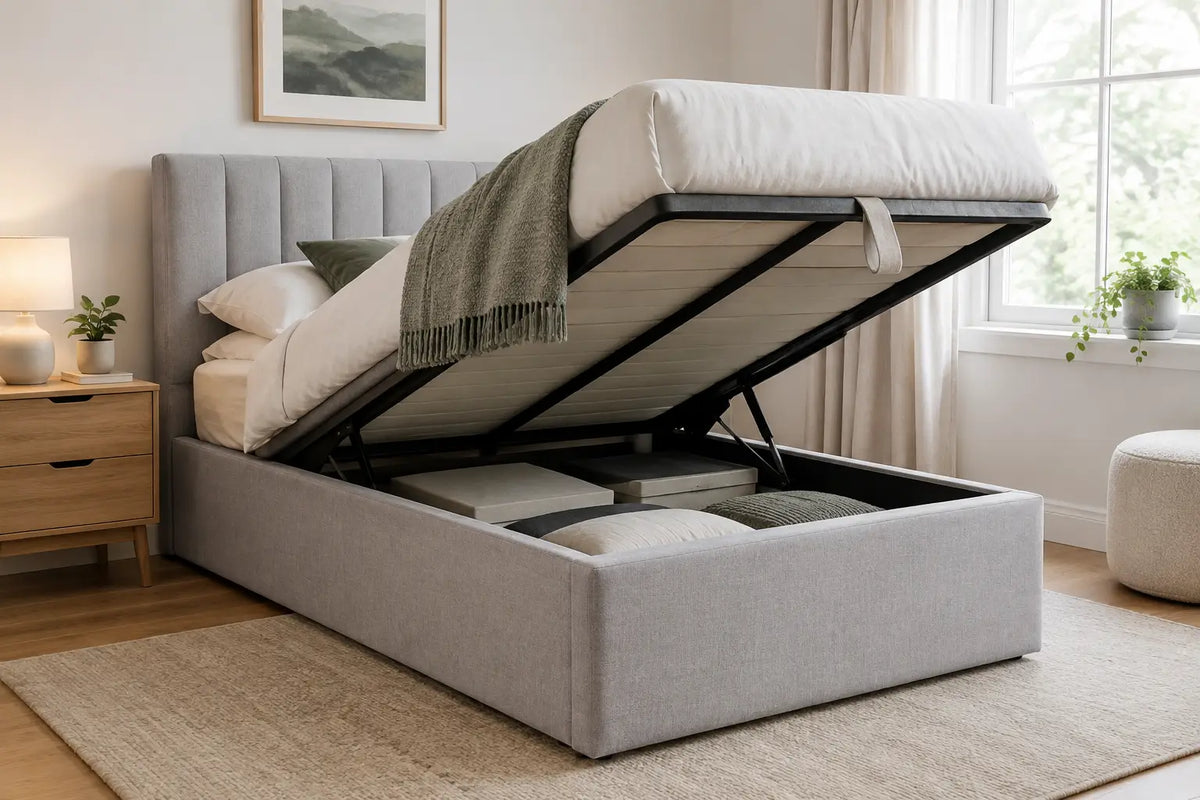
A compact bedroom asks more of every piece within it. The bed must still feel generous enough for proper rest, yet leave the room calm, considered and easy to move through. An ottoman bed for small rooms answers that brief particularly well: it creates substantial, concealed storage beneath the mattress without adding another chest, cabinet or freestanding box to the scheme.
The best choice is not simply the smallest bed that will fit. It is the one with the right proportion, opening style and upholstery detail for the room, so it reads as a refined centrepiece rather than a compromise.
Why an ottoman bed for small rooms works so well
In a smaller room, visible storage can quickly become visual noise. Even beautiful furniture loses its effect when wardrobes, bedside tables and under-bed boxes compete for attention. An ottoman base puts the largest unused volume in the room to work, while keeping bed linen, seasonal clothing, spare duvets and occasional items entirely out of sight.
Unlike drawer storage, an ottoman bed does not need clearance at either side for drawers to open. This makes a marked difference where the bed sits close to a wall, beneath a window, or between fitted joinery. The mattress lifts on a supported mechanism, revealing the full footprint of the base below. For many bedrooms, it is the difference between adding a storage solution and designing one into the room from the outset.
There is also a design advantage. A well-upholstered ottoman base creates one composed, architectural form. Paired with a tailored headboard and a fabric chosen to suit the curtains, carpet or wall finish, it can make a modest room feel more resolved, not more crowded.
Start with proportion, not just mattress size
A bed can fit on a floor plan and still dominate the room. Before selecting a size, consider the full dimensions of the finished piece, including the base, headboard and any footboard. Upholstered frames can be slightly wider or longer than the mattress they hold, and this extra detail matters in a compact setting.
A UK double mattress measures 135cm by 190cm, while a king size measures 150cm by 200cm. The king size offers a more luxurious sleeping surface, particularly for couples, but it also claims an additional 15cm in width and 10cm in length before the frame is considered. In a narrow bedroom, that can reduce the passage around the bed enough to change how the room feels every day.
Where space is tight, a double ottoman bed with a generously scaled headboard can often look more expensive and intentional than a king size squeezed wall to wall. Conversely, a larger room with restricted storage may justify a king size ottoman, provided there is sensible access around it. The question is not whether the room can contain the bed, but whether it can support the life around it.
Allow for everyday movement
Aim for comfortable circulation at the sides and foot of the bed, especially on the side used most often. There is no single measurement that suits every room, but enough space to make the bed, open a wardrobe and pass without turning sideways will preserve the sense of ease that a bedroom should offer.
Also look above and behind the bed. A high, deeply padded headboard brings beautiful presence, but a low ceiling, sloping roofline or window ledge may call for a more restrained silhouette. In compact rooms, clean vertical lines and a headboard proportioned to the wall can create height without overwhelming it.
Choose the right ottoman opening direction
The mechanism is as important as the upholstery. Most ottoman beds use gas-assisted pistons to lift the mattress platform smoothly, making the storage accessible without the effort associated with a traditional lift-up base. The mechanism should feel controlled and substantial, particularly with a heavier premium mattress in place.
End-opening ottomans lift from the foot of the bed and are often the most natural choice when both sides are close to walls or furniture. They provide broad access across the storage cavity from the foot end, which suits bedrooms with a clear walkway there.
Side-opening ottomans lift along one long side. They can be an elegant solution when the foot of the bed sits close to a wall, bench or fitted furniture. The opening side must be selected to suit the layout, however. If the bed is pushed against a wall, the lift needs to open from the accessible side. It is a small decision on paper, but one that determines whether the storage remains genuinely useful.
A front-opening arrangement may be preferable in a guest room, where spare bedding is accessed occasionally. In a principal bedroom, consider what will be stored and how often it will be needed. Everyday items should be easy to reach without moving furniture or negotiating a narrow gap.
Consider the mattress and lifting experience together
An ottoman mechanism is calibrated to work with a mattress of an appropriate weight. A high-quality mattress can be substantial, particularly one made with layered natural fillings, springs and a deep comfort layer. That weight often contributes to exceptional comfort and longevity, but it should be specified correctly with the chosen base.
Ask for guidance where the bed and mattress are being selected separately. The aim is a lift that remains balanced: light enough to raise with confidence, yet firm and stable when lowered. A properly matched mechanism will hold the platform open while you organise the storage, then close with a composed, secure action.
For households with young children, remember that the storage compartment is not a play space. Select a bed with a well-engineered mechanism and use it as intended, keeping the area clear before closing.
Make upholstery work harder for the room
Storage is the practical value of an ottoman bed, but upholstery determines how it belongs in the interior. In a small bedroom, fabric can either soften the architecture or make the bed feel visually heavy.
Pale linens, warm neutrals and softly textured bouclés tend to reflect light and create a quieter impression. They are especially effective in rooms with limited daylight. Richer wools, velvets and darker tones can be equally successful, though they are best balanced with lighter walls, considered bedside lighting and a headboard shape that does not appear overly bulky.
The choice should also reflect how the room is used. A tailored woven fabric offers an understated, enduring finish for a principal bedroom. Velvet brings depth and a more decorative note, particularly when paired with brass, walnut or smoked glass. For a guest room, choose a material that feels welcoming and resilient rather than overly precious.
Free fabric swatches are particularly useful here. View them at different times of day and place them beside existing flooring, paint and joinery. A fabric that appears perfectly neutral in a showroom can reveal a cooler or warmer undertone at home.
Keep the detailing disciplined
A smaller room rarely benefits from every available decorative feature at once. A statement headboard, deep buttoning, contrast piping and a tall footboard can each be beautiful, but together they may make the bed feel too elaborate for its setting.
Choose one defining detail. A curved headboard can soften a square room. Fine piping can introduce a tailored edge. A plain upholstered base with a distinctive fabric lets the material take the lead. This restraint gives the room the polished quality of a considered hotel suite, where every element has space to register.
Use the storage with intention
The inside of an ottoman base is most useful when it is treated as long-term, concealed storage rather than a place to put everything at once. Keep bulky, low-frequency items there: winter duvets, guest bedding, luggage, out-of-season knitwear or boxes of personal papers. Store frequently used clothing in wardrobes and drawers, where access is quicker.
Use breathable storage bags or neatly sized boxes rather than loose piles. This protects fabrics, makes cleaning easier and prevents the compartment becoming an unseen source of disorder. If the room has no linen cupboard, reserve one section of the base for freshly laundered sheets and towels so they remain protected and ready for use.
An ottoman bed cannot replace thoughtful wardrobe planning, but it can dramatically reduce the pressure on it. This is especially valuable in period homes, city flats and guest rooms where built-in storage is limited or awkwardly positioned.
Plan delivery as carefully as the layout
A substantial upholstered bed is a considered purchase, and the route into the room deserves attention. Measure staircases, turns, lift dimensions and door openings before delivery, particularly in converted properties and upper-floor flats. Confirm whether the bed is delivered in sections and whether assembly and removal of an existing bed are available.
At The Natural Collection, the aim is to make the decision feel as considered as the finished room. A discussion about size, fabric, access and mattress weight before ordering can prevent the most common compromises later.
The right ottoman bed should leave a small room feeling less constrained, not merely better stored. Choose a proportion that allows the room to breathe, a mechanism that suits how you live, and an upholstery finish you will be pleased to see every morning. The result is a bedroom with more order behind the scenes and more calm in plain sight.
Share:
A Side Opening Ottoman Bed for Elegant Bedrooms
Ottoman Bed Storage Mechanism: What to Know