

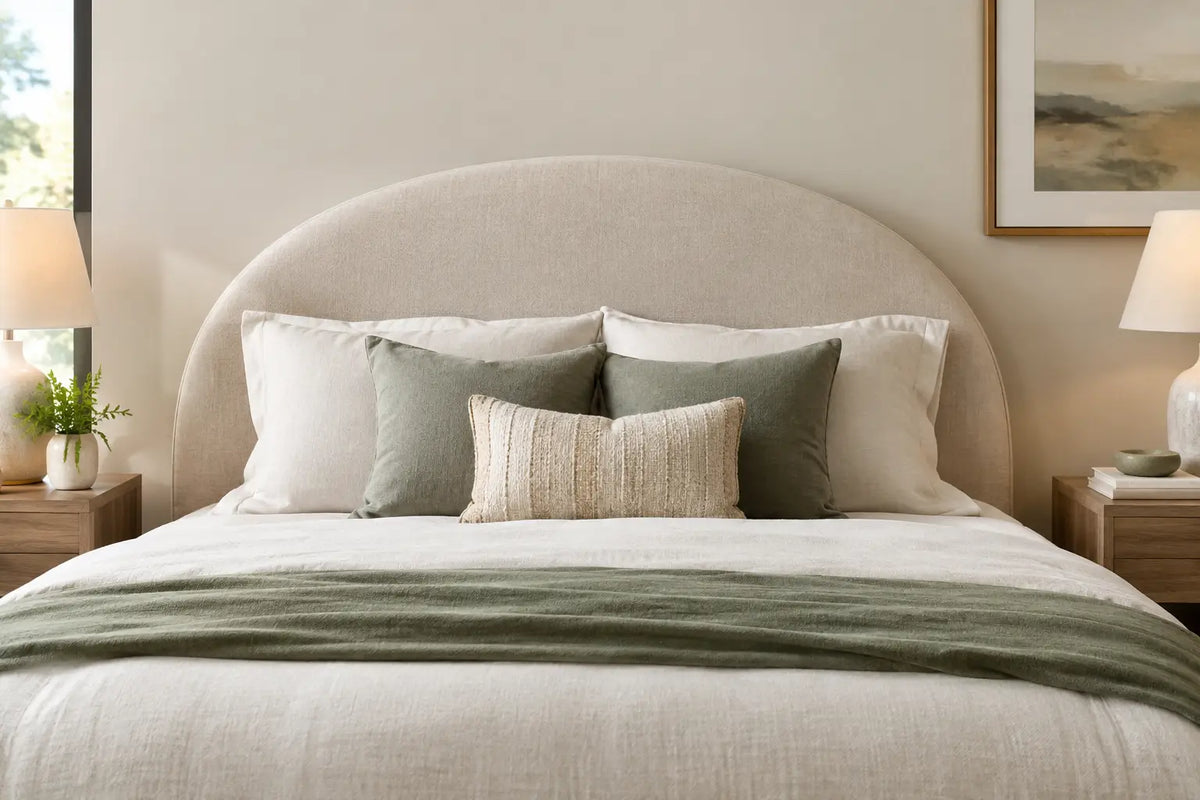
A beautifully curved headboard changes the atmosphere of a bedroom before a single cushion is placed. It softens the geometry of wardrobes, bedside tables and window frames, while giving the bed a more considered, architectural presence. Curved headboard trends are therefore less about a passing silhouette and more about the return of rooms designed for rest: composed, tactile and quietly luxurious.
For a bedroom that is intended to feel as considered as the rest of the home, the appeal is immediate. A curve can make a generous super king feel inviting rather than imposing, and lend visual ease to a compact room where every piece must earn its place. The distinction lies in proportion, upholstery and execution. A well-made curved headboard should feel enduring, not theatrical.
Why curved headboard trends have lasting appeal
The renewed preference for curves reflects a broader shift away from interiors built entirely around sharp lines and hard surfaces. Bedrooms, in particular, benefit from forms that feel calm on the eye. A rounded or arched headboard introduces this softness without sacrificing structure, creating a natural focal point behind the bed.
There is also a practical reason the shape works so well. The headboard is usually the largest vertical upholstered element in the room. When its outline is softened, it can make substantial furniture appear more elegant and less formal. This is especially valuable with wide beds, deep mattresses and layered bedding, where a square profile can sometimes feel heavy.
The most successful interpretations are restrained. Think of a low, continuous radius running across a wide headboard, a subtly scalloped top edge, or a tailored arch framed by clean upholstery. These forms sit comfortably in both period properties and contemporary homes because they do not depend on novelty. They rely on balance.
The defining curved headboard trends to consider
The generous single arch
A single, broad arch is perhaps the most versatile expression of the look. It frames the bed with a sense of height and ceremony, yet remains serene when the curve is shallow and the upholstery is finely tailored. In rooms with high ceilings, a tall arch can hold its own against generous curtains, original cornicing or statement lighting.
For more modern settings, choose a lower arch with a wider span. It feels less decorative and more architectural, particularly when upholstered in a finely woven wool, textured linen-look fabric or matte velvet. The aim is for the shape to register from the doorway without dominating every other detail.
The softly winged profile
Winged headboards have long offered a cocooning quality, but current designs favour gentler returns and less rigid angles. A curved wing creates a subtle sense of enclosure around the pillow area, making the bed feel particularly inviting for reading or an unhurried morning coffee.
This style deserves adequate breathing room. It is most compelling when bedside tables are not squeezed against the wings and when the headboard is scaled carefully to the bed base. In a narrow bedroom, a slim-profile wing may be preferable to a deep, sheltering form. Luxury is not measured by excess volume, but by how effortlessly the piece fits the room.
Fluted and channelled curves
Vertical fluting and softly channelled upholstery bring depth to a curved outline. The detail catches changing daylight and gives a plain fabric a more dimensional character. It can be particularly effective in a tonal scheme, where the bed needs presence without introducing another strong colour.
There is a balance to strike. Deep channels, bold contrast piping and a dramatic curved shape can compete with one another. If the headboard has an expressive outline, refined vertical channels or delicate fluting are generally enough. The workmanship should be visible in the even spacing, clean tension and precise meeting of every upholstered line.
The continuous wall-to-wall statement
For a principal bedroom, a wide upholstered headboard extending beyond the bed can be one of the most polished approaches. The curve may be concentrated above the bed or repeated gently across the full width, with integrated panels behind the bedside tables. It creates the atmosphere of a carefully commissioned hotel suite while allowing the room to remain personal.
This approach is especially suited to a bespoke-style scheme and offers a useful opportunity to coordinate fabric, piping and bed base. It does, however, require accurate measurements. Consider socket locations, bedside-table height, skirting depth and access routes before committing to a large upholstered piece. A headboard should look made for the room, not merely made to fit into it.
Choosing the right scale for your bed and room
Scale is where an exceptional bedroom differs from one that simply follows a trend. As a starting point, the headboard should be at least the width of the mattress, but a wider design often feels more luxurious. On a king or super king bed, extending beyond the mattress on each side can give bedside furniture a composed, intentional setting.
Height depends on what the room needs. A lower curved headboard works beautifully below artwork, beneath a window or in a room where the ceiling detail should remain the star. A taller design adds grandeur and is often the better choice where the bed sits on a broad, unadorned wall. In either case, assess the view from the bedroom entrance. The silhouette should read clearly, without blocking light or making the room feel compressed.
Do not overlook mattress depth. Premium mattresses often have a more substantial profile, especially when paired with a well-upholstered divan or ottoman base. A headboard that appears tall on paper may feel modest once deep bedding and European pillows are in place. Allow for the finished height of the full sleeping arrangement, rather than measuring from the base alone.
Upholstery makes the shape feel expensive
A curved form asks more of its fabric and craftsmanship than a simple rectangular panel. The material must follow the contour smoothly, with no pulling, puckering or loss of definition at the edges. This is why fabric selection should be led by both appearance and performance.
Velvet gives curves depth and a more formal, evening-like richness. In colours such as mineral grey, deep olive, tobacco or midnight blue, it can create an enveloping backdrop for crisp linens. A quality velvet should have a dense pile and a refined handle rather than an overt sheen. It is striking, though it may show pressure marks or directional shading more readily than a woven fabric.
Bouclé and textured weaves create a softer, contemporary look. Their tactile surface is particularly sympathetic to rounded shapes, making the headboard feel relaxed but still tailored. They suit lighter, quieter palettes and can bring warmth to a bedroom with timber, stone or antique brass accents. For homes with pets, young children or frequent use, ask for a fabric suited to your lifestyle and consider ordering swatches to view in the room’s natural and evening light.
Linen-look upholstery has a timeless quality, especially in warm neutrals, mushroom tones and softened mineral shades. It is an excellent choice when the aim is an understated bedroom rather than a highly decorative one. The right neutral should not disappear into the wall; look for subtle contrast in undertone or texture so the curve remains legible.
Pairing a curved headboard with the wider bedroom
Curves are most convincing when echoed quietly elsewhere, rather than repeated without restraint. A rounded bedside lamp, an oval mirror, a circular rug edge or a gently curved occasional chair can establish rhythm. One or two references are sufficient. Filling the room with matching curves risks making the scheme feel overly themed.
The bed base matters equally. A clean upholstered divan gives the headboard centre stage, while an ottoman storage bed combines the same refined appearance with useful concealed capacity. In bedrooms where storage is at a premium, this is often the more intelligent choice. It protects the room’s calm by keeping spare bedding, seasonal linens and luggage out of sight.
Bedding should support, rather than conceal, the silhouette. Use pillows generously, but avoid building a wall of cushions that obscures the lower part of a beautifully shaped headboard. A pair of European squares, sleeping pillows and a restrained lumbar cushion usually offer enough layering. Choose a throw with weight and texture instead of excessive pattern.
What to avoid when choosing a curved headboard
The main risk is choosing a shape that is too ornate for the architecture of the room. A highly scalloped headboard can be exquisite in the right setting, but may feel disconnected in a pared-back new-build flat. Similarly, an oversized arch can overwhelm a low ceiling or make modest bedside furniture appear undersized.
Avoid making every decision from a small online image. Request fabric swatches, measure the available wall width and compare the headboard height with your bedside tables, lamps and mattress. If you are investing in a made-to-order upholstered design, it is worth taking time over these details. At The Natural Collection, the most rewarding choices tend to be those that consider the bed, mattress, fabric and storage requirements as one complete arrangement.
A curved headboard earns its place when it brings composure to the room, not simply attention. Choose the shape that suits your architecture, the fabric you will enjoy living with, and proportions that still feel right when the bedroom is quiet, sunlit and completely your own.
Share:
Bed Delivery and Assembly, Properly Planned
Designer Bedroom Guide for a Considered Retreat